
What to Pack When Your Trip Includes Campsites and Long Trails
It is 6 a.m. at a fixed camp, the tent still holds last night’s cold, and a full day on the trail waits past the treeline. What to bring on the trip was settled in the driveway. The open question each morning is what leaves camp in the daypack and what stays behind in the tent. A trip that pairs a standing campsite with long day hikes runs on two packs, and knowing which items belong in which one is the difference between a light, fast day and a slow one spent hauling gear you never touch.
The Two-Pack System
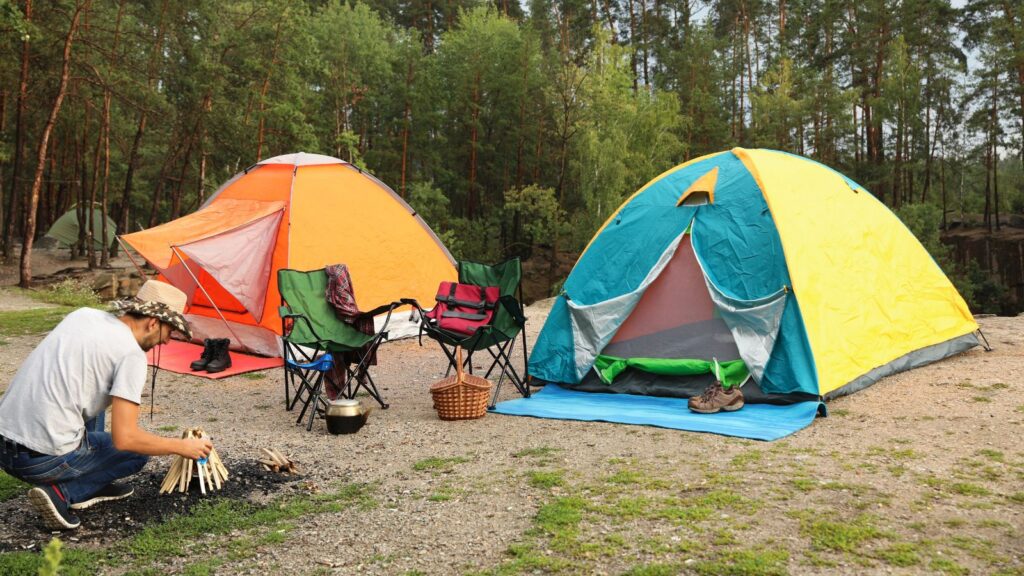
A basecamp trip separates the load into two jobs. The large pack carries everything to the site and then stays put. The small daypack carries what a hiker needs for the hours between leaving camp and returning to it. This split is the entire advantage of camping in one spot and hiking out from it. Camp holds the weight, and the trail sees only what the day requires.
The daypack should be in the 20- to 35-liter range for this kind of trip. That size holds water, food, layers, and safety gear without tempting a hiker to overfill it. Anything larger invites the same overpacking the basecamp setup exists to avoid.
The Camp Load
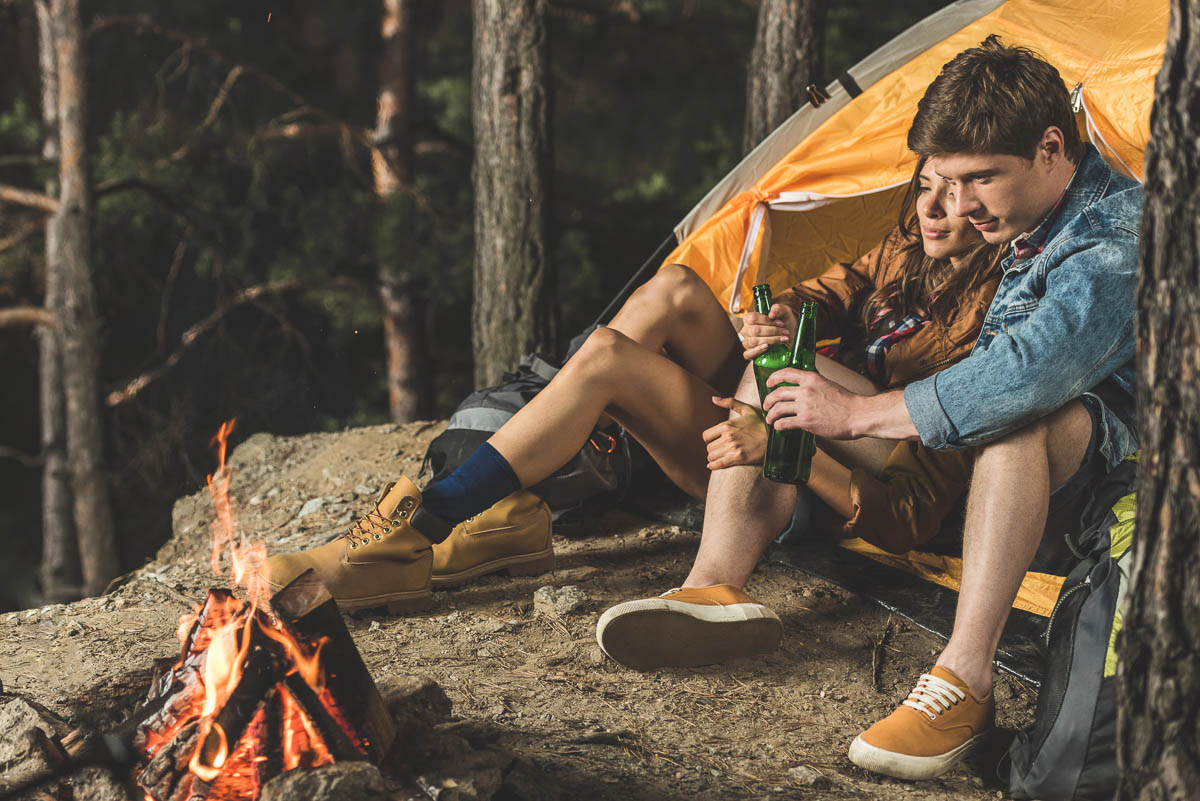
Most of the trip’s comfort lives at camp and never moves. The sleeping bag, the pad, the pillow, the stove and cookset, spare clothing, toiletries, and any electronics beyond a phone belong in the tent or a bin, not on your back at mile six. A camp chair and a book are worth carrying when they wait at a fixed site. They become dead weight the moment they go up a ridge.
Ask each item one question before it leaves camp. Will the trail use this in the next eight hours? A headlamp belongs because a hike can run long. A second pair of camp shoes does not, because feet stay in boots on the trail.
Food storage is its own decision at a fixed camp. In bear country, the whole food supply goes into a canister or hangs well away from the tent because a basecamp that holds one spot for several nights teaches the local wildlife where the easy meals are. What stays at camp still has to be stored as if no one is watching it.
The Daypack Core
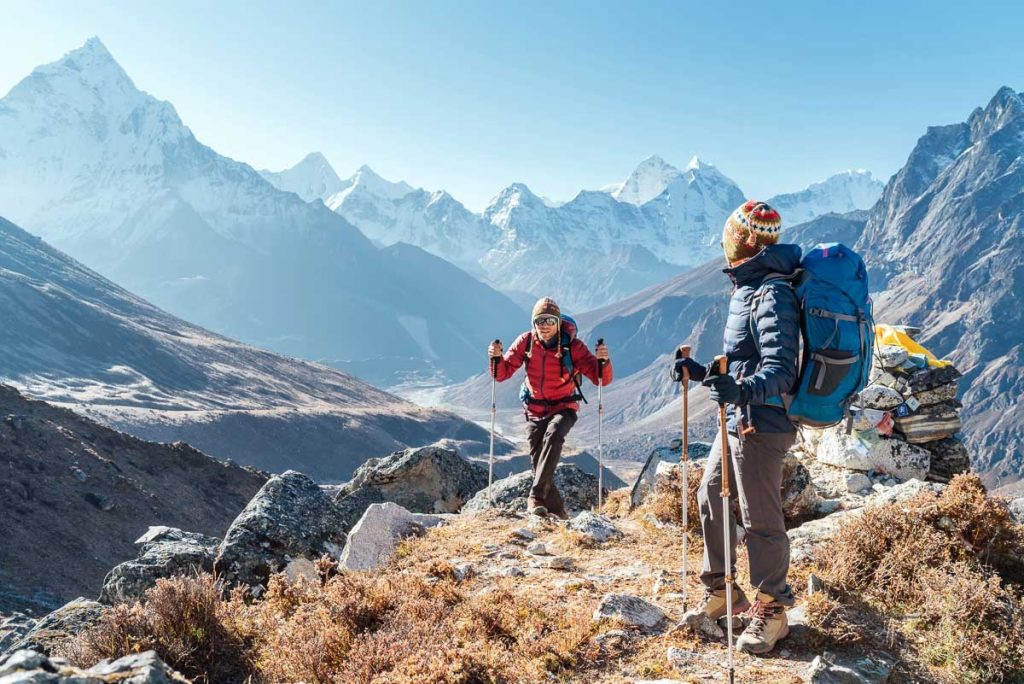
Three things fill most of the daypack: water, food, and a weather layer. Water is the heaviest and the most important, so it sets the size of the load. Food for a long day means calorie-dense trail snacks a hiker can eat while moving: energy bars, jerky, nuts, and a real meal if the route crosses midday. A lightweight waterproof jacket handles the weather that a morning sky rarely predicts.
Beyond those three, the daypack carries the safety items that stay small until the day they matter. A map and compass, a first aid kit, a fire source, and a headlamp round out the load. None of these weigh much, and each answers a specific way a long day can go wrong. Pack the heavy water low and close to the back so the load stays steady instead of pulling at the shoulders on uneven ground.
Tools for the Trail
A day on a long trail asks for a few tools that camp does not. A knife covers food prep and gear repair, plus the small cutting jobs a trail produces, from trimming moleskin to freeing a snagged strap. Many hikers carry a compact multi-tool for the pliers and screwdriver, and some pack one of the custom made EDC knives they trust for daily use, since a familiar blade handles trail chores without a second thought. A short length of cord and a strip of tape handle most field repairs a daypack will ever face.
A small kit covers the common problems. A knife, a multi-tool, and a few feet of cord solve more trail situations than a heavy gadget roll that stays zipped all day.
Planning the Water
Water planning drives the whole daypack because hydration is the one thing a hiker cannot improvise on a dry ridge. Plan for roughly half a liter to a full liter per hour of hiking, and carry at least two liters for any moderate day out. Heat, altitude, and hard climbing push the number higher, sometimes past a gallon on a long, hot day.
If the route crosses reliable water, a filter cuts the carried weight sharply, since a hiker can refill instead of hauling the full day’s supply from camp. Map the sources before leaving, and treat a dry creek as a real change of plan. Running out of water far from camp turns a good day into a dangerous one. Salt matters as much as volume on a hot day, since a hiker who drinks water alone for hours can still cramp and fade, so an electrolyte tab or a salty snack helps the body hold what it takes in.
Weather on a Long Trail
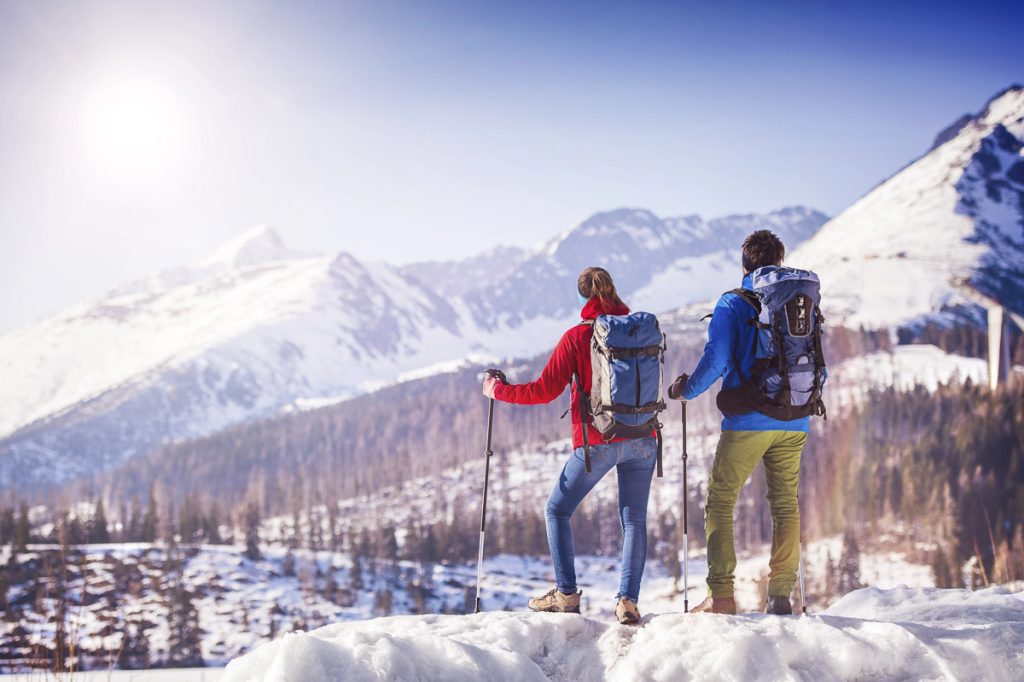
A long trail exposes a hiker to weather that camp is sheltered from because elevation changes conditions fast. A morning that starts calm at a low campsite can turn windy and cold on an open ridge by afternoon. The daypack should always hold a warm layer and a waterproof shell, even on a forecast that promises sun. The weight is small, and the protection is significant.
Turning back is always an option, and a hiker close to a fixed camp has an easy retreat that a point-to-point backpacker does not. That is the quiet benefit of basecamp travel. The trail can be abandoned at any point, and a warm, dry camp is waiting a few miles back.
The Day in Numbers
A basecamp trip comes down to a simple split. The daypack carries the hours between camp and camp, rarely more than 35 liters of it, while everything else stays in the tent, where its weight costs nothing. Pack the day around what the trail will use in the next eight hours, leave the rest at camp, and the long trail stays a pleasure instead of a chore.
Conclusion
Packing for a trip that combines campsites with long trails is less about carrying more gear and more about carrying the right gear in the right place. A well-organized basecamp keeps comfort where it belongs, while a thoughtfully packed daypack provides everything needed for a safe and efficient day on the trail. By separating camp essentials from hiking necessities and preparing for changing conditions, you can move more comfortably, reduce unnecessary weight, and enjoy every mile with greater confidence.

Catherine Xu is the founder and author of Nomadicated, an adventure travel blog that helps travelers cross off their bucket list. Since discovering traveling in 2015, she has lived and journeyed to 65 countries across 5 continents and vanlifed the west coast USA for 2+ years. These days, she splits her time in Southeast Asia and California while sharing her travel stories and resources based on first-hand experiences. Catherine's other works has been referenced in major publications like MSN, Self, and TripSavvy.