
15 South African Traditional Food Favorites Locals Love Deeply
Traditional South African food is shaped by migration, trade, and survival, all meeting in one kitchen. Indigenous communities built meals around maize, beans, and foraged ingredients long before colonial influence arrived. Dutch settlers, later known as Afrikaners, brought baking, preserved meats, and slow cooked dishes, while enslaved people from Southeast Asia introduced spices that still define Cape cuisine today. Indian laborers added bold curries to the mix, especially around Durban.
The stereotype of South African food culture leans heavily on meat and fire. The braai sits at the center of social life, where weekends turn into long gatherings around grills. At the same time, there is a strong street food culture in townships.
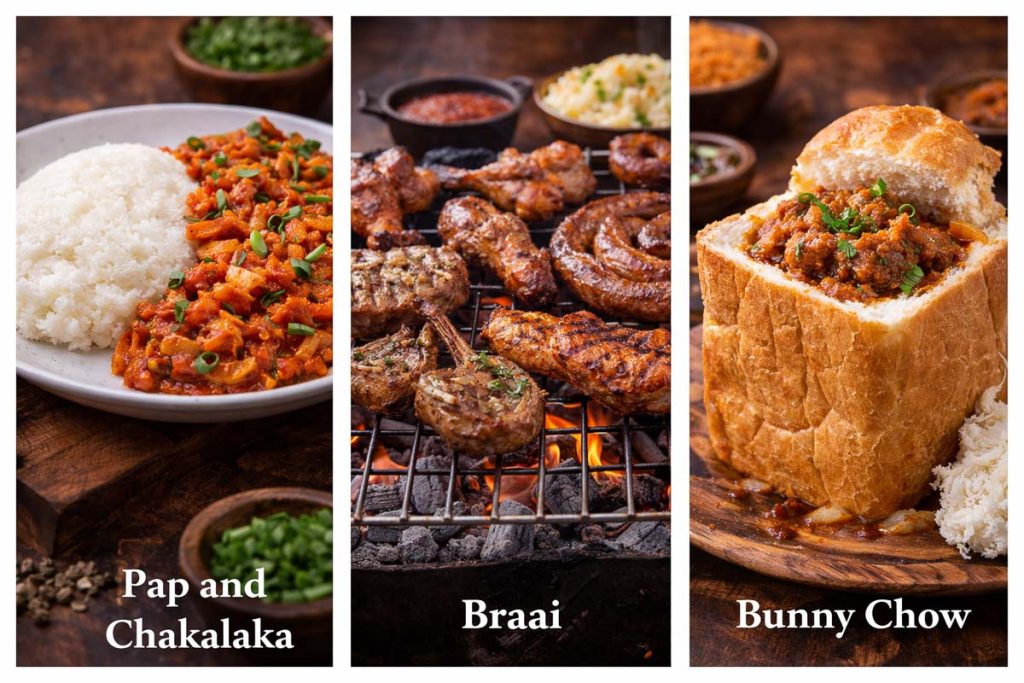
1. Pap and Chakalaka
- Type: maize porridge with spicy vegetable relish
- Where to find: nationwide
Pap sits at the center of South African meals and has been eaten for generations across many communities. It is made from ground maize and cooked into a thick, soft base that pairs with almost anything. Chakalaka adds heat and texture with tomatoes, beans, carrots, and chili, a mix shaped by township cooking traditions. The combination reflects both everyday eating and large social gatherings where big pots feed many people at once.
2. Braai
- Type: grilled mixed meats
- Where to find: nationwide
Cooking over open flames is a national habit and a social ritual as much as a meal. Beef, boerewors sausage, lamb chops, and chicken all go on the grill, often seasoned simply with salt and spice. Weekends and holidays revolve around this setup, with friends gathering around the fire for hours. It connects modern life with older traditions of cooking over wood and coals.
3. Bunny Chow
- Type: hollowed bread filled with curry
- Where to find: Durban and KwaZulu-Natal
This dish started in Durban’s Indian community during the mid 20th century as a practical takeaway meal. A loaf of white bread is hollowed out and filled with hot curry, usually chicken, lamb, or beans. It became popular among workers who needed something filling and easy to carry. Today it stands as a symbol of the city’s cultural mix and street food culture.
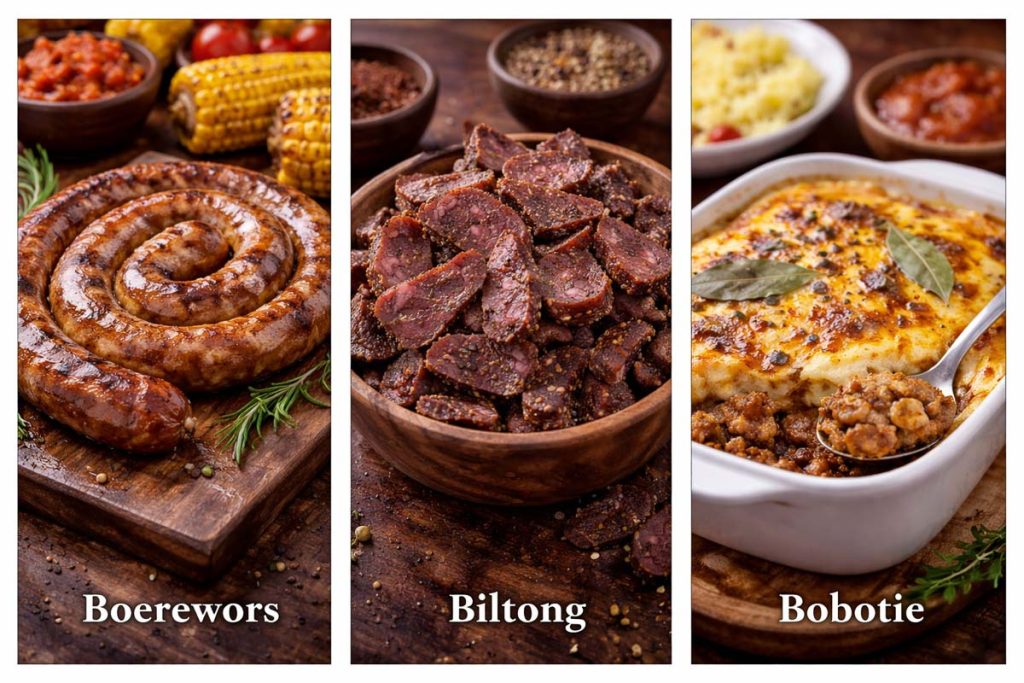
4. Boerewors
- Type: coiled beef sausage
- Where to find: nationwide
Boerewors translates to farmer’s sausage and follows a traditional recipe with beef, fat, and spices like coriander. It is usually cooked on a braai and served in a roll or alongside pap. The recipe has roots in Dutch settler cooking but evolved locally with regional spice blends. Its distinct flavor and spiral shape make it easy to spot at markets and gatherings.
5. Biltong
- Type: air dried cured meat
- Where to find: nationwide
Biltong dates back to early settlers who needed a way to preserve meat without refrigeration. Strips of beef or game are salted, spiced, and hung to dry slowly. The result is a firm snack with deep flavor that differs from jerky due to its curing method. It remains a common snack sold in shops, petrol stations, and markets across the country.
6. Bobotie
- Type: spiced minced meat bake with egg topping
- Where to find: Western Cape
Bobotie carries strong Cape Malay influence, blending sweet and savory elements in one dish. Minced meat is mixed with spices, dried fruit, and bread soaked in milk, then baked with a custard topping. The flavors reflect trade routes that brought spices from Southeast Asia to the Cape. It is often served with yellow rice and chutney, tying together different culinary influences.
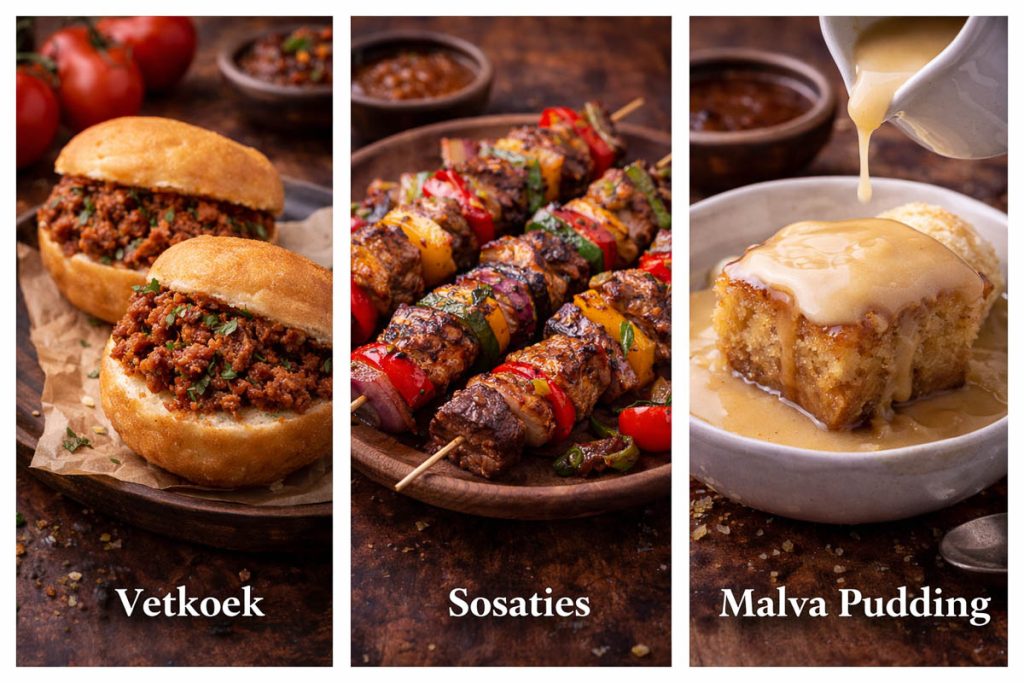
7. Vetkoek
- Type: deep fried dough bread
- Where to find: nationwide
Vetkoek means fat cake and has roots in Dutch cooking traditions adapted in South Africa. The dough is fried until golden and then filled with mince, cheese, or jam. It is sold by street vendors and made at home for quick meals or snacks. The contrast between crisp outside and soft inside makes it a favorite comfort food.
8. Sosaties
- Type: marinated meat skewers
- Where to find: Western Cape and nationwide
Sosaties reflect Cape Malay cooking with sweet and spiced marinades that include apricot jam, curry, and garlic. Cubes of meat are skewered with onions and grilled over coals. The balance of flavors shows influence from Southeast Asian cuisine brought through trade. They are common at braais and festive gatherings.
9. Malva Pudding
- Type: warm sponge dessert with syrup
- Where to find: nationwide
Malva pudding is a soft baked dessert soaked in a buttery cream sauce right after it comes out of the oven. It likely has Dutch origins but became a staple in South African homes and restaurants. The texture stays moist and slightly sticky, usually served hot with custard or ice cream. It is especially popular during colder months and holiday meals.
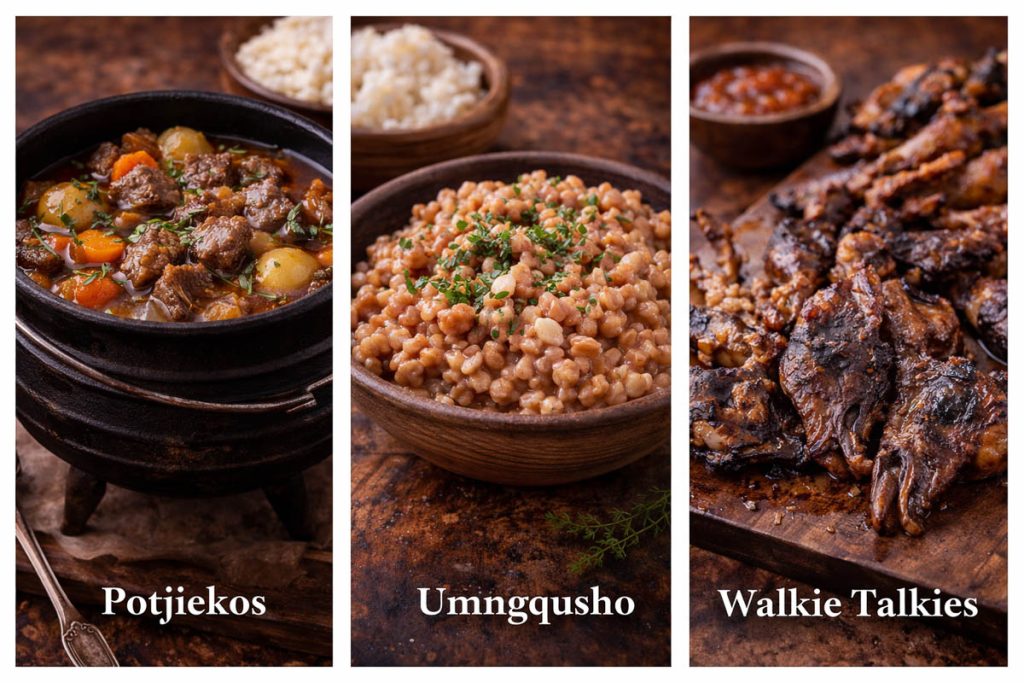
10. Potjiekos
- Type: slow cooked meat and vegetable stew
- Where to find: nationwide
Potjiekos is cooked in a three legged cast iron pot over an open fire. Ingredients are layered rather than stirred, allowing flavors to develop slowly over several hours. The method comes from early settlers who cooked outdoors while traveling. Today it is a social cooking style where people gather around the pot while it simmers.
11. Umngqusho
- Type: samp and beans dish
- Where to find: Eastern Cape
Umngqusho is closely associated with Xhosa cuisine and is made from crushed maize kernels cooked with sugar beans. It gained wider recognition as a favorite of Nelson Mandela during his youth. The dish is simple but filling and often served with meat or gravy. It reflects rural cooking traditions that rely on staple crops.
12. Walkie Talkies
- Type: grilled or fried chicken feet and heads
- Where to find: townships nationwide
This street food is known for its direct use of all parts of the chicken. It is usually grilled or deep fried and seasoned heavily with spices. Popular in townships, it is affordable and widely available from vendors. The name comes from the playful idea of chickens walking and talking before cooking.
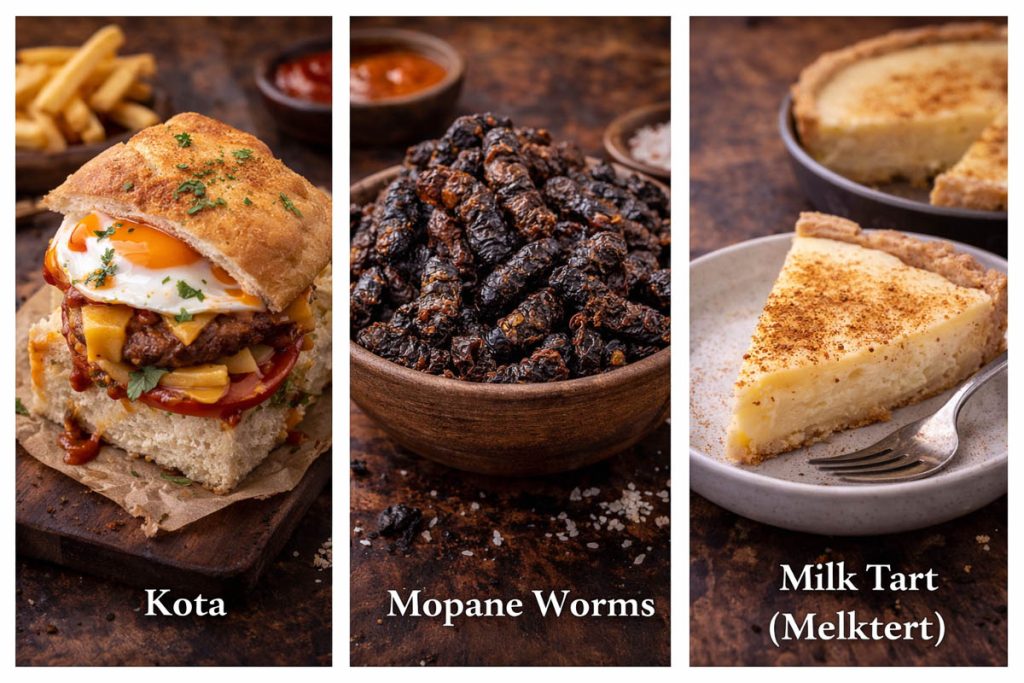
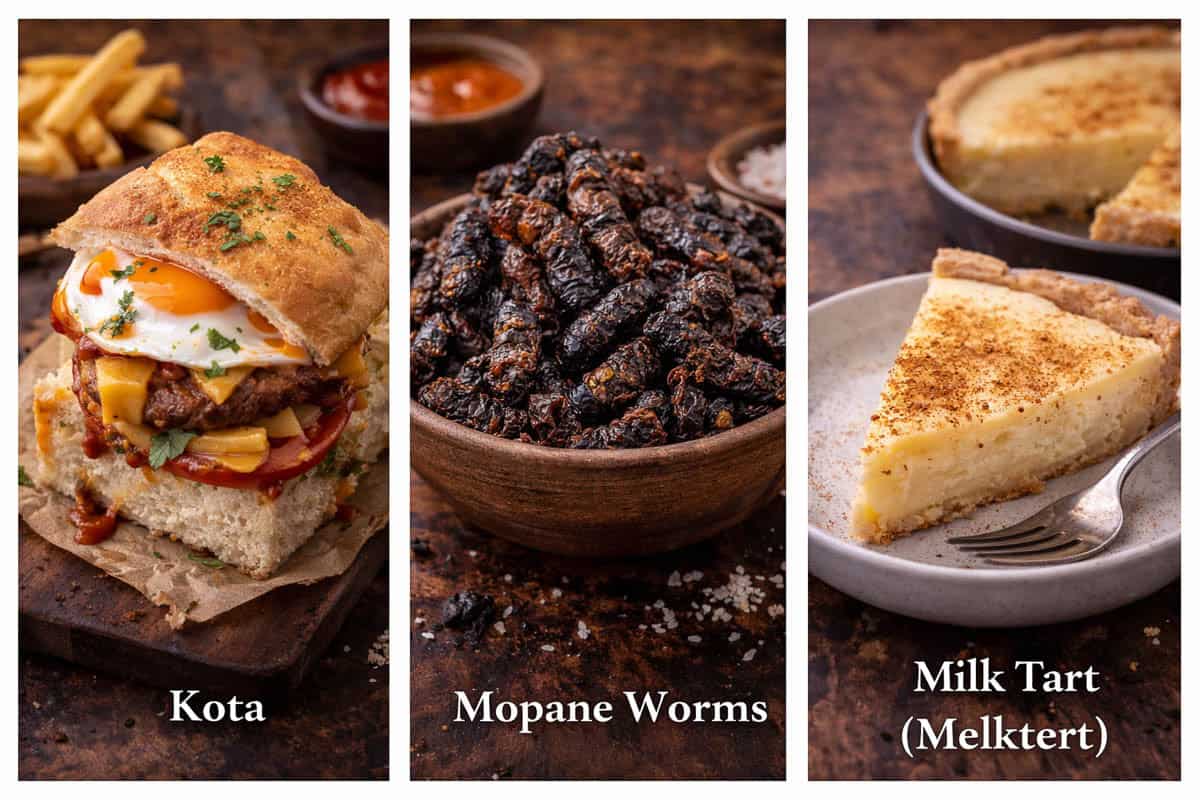
13. Kota
- Type: quarter loaf sandwich stuffed with fillings
- Where to find: Gauteng and townships nationwide
Kota is built from a hollowed quarter loaf packed with chips, processed meats, eggs, and sauces. It became popular in township areas as a filling and affordable street meal. Each vendor has their own version, often loaded with multiple layers. It reflects fast paced urban food culture with bold flavors and big portions.
14. Mopane Worms
- Type: dried caterpillar snack or stew
- Where to find: Limpopo and northern regions
Mopane worms are actually caterpillars harvested from mopane trees. They are dried or cooked in tomato based sauces and eaten as a protein source. This practice goes back centuries in rural communities. They are high in nutrients and remain an important seasonal food.
15. Milk Tart (Melktert)
- Type: creamy custard tart
- Where to find: nationwide
Milk tart has Dutch roots and became a household dessert across South Africa. It features a light custard filling made from milk, eggs, and sugar in a pastry crust. A dusting of cinnamon on top gives it a recognizable finish. It is commonly served at celebrations, tea times, and family gatherings.

Catherine Xu is the founder and author of Nomadicated, an adventure travel blog that helps travelers cross off their bucket list. Since discovering traveling in 2015, she has lived and journeyed to 65 countries across 5 continents and vanlifed the west coast USA for 2+ years. These days, she splits her time in Southeast Asia and California while sharing her travel stories and resources based on first-hand experiences. Catherine's other works has been referenced in major publications like MSN, Self, and TripSavvy.