
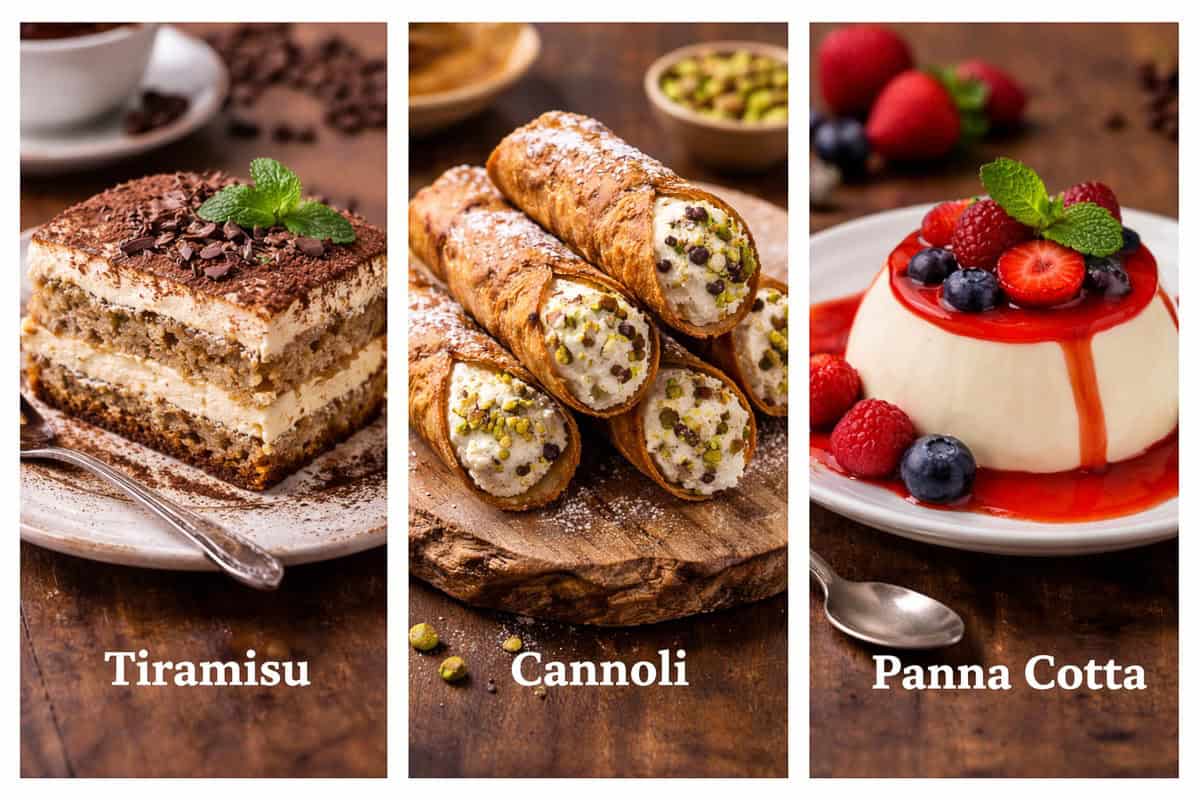
15 Traditional Italian Desserts That Are Worth Every Single Calorie
Italian desserts grew out of centuries of trade and local ingredients. Sugar arrived through Arab influence in places like Sicily, which is why so many southern desserts lean sweet and bold with candied fruit and ricotta. Up north, areas like Piedmont and Lombardy built their sweets around cream, butter, and nuts thanks to strong dairy farming.
Religious festivals and holidays played a big role too, with recipes like panettone and struffoli tied directly to Christmas traditions that families still follow today. Over time, each region held onto its own style, so traveling across Italy often feels like flipping through completely different dessert menus.
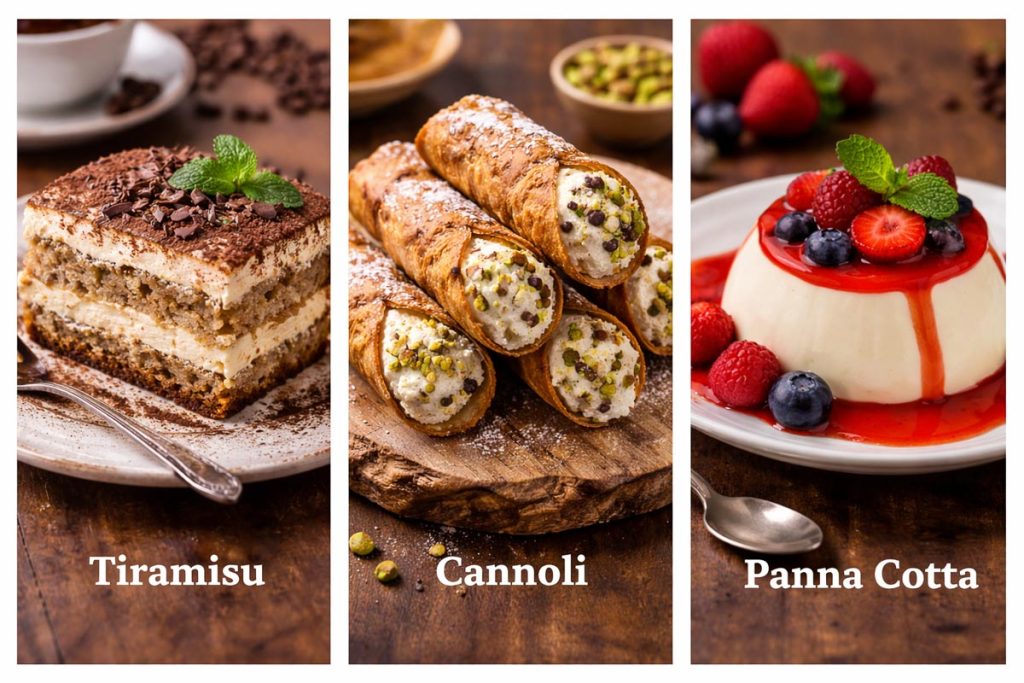
1. Tiramisu
- Type: Layered dessert
- Where to find: Veneto, especially Treviso
Legend says this dessert showed up in the 1960s and wasted no time becoming Italy’s most recognized sweet. Tiramisu stacks coffee-soaked ladyfingers with mascarpone cream and a dusting of cocoa that hits right away. The name literally means “pick me up,” which makes sense after a few bites of espresso and sugar working together. It feels modern compared to other Italian desserts, but locals guard their family recipes like secrets.
2. Cannoli
- Type: Fried pastry
- Where to find: Sicily, especially Palermo
Cannoli started as a carnival treat and now they’re everywhere from bakeries to street stalls. The shell is crisp and slightly blistered from frying, then filled with sweet ricotta that often gets mixed with chocolate chips or candied fruit. Sicily takes this seriously, and filling them fresh is non negotiable if you want that crunch. Some shops still use sheep’s milk ricotta, which gives it a sharper flavor.
3. Panna Cotta
- Type: Cream dessert
- Where to find: Piedmont region
This one looks simple but it carries a long history tied to northern Italy’s dairy culture. Panna cotta means “cooked cream,” and that’s basically what you get, gently set with gelatin until it holds its shape but still jiggles. It’s usually served with berry sauce or caramel, though some places keep it plain and let the cream shine. It feels light, which is dangerous because it disappears fast.
4. Gelato
- Type: Frozen dessert
- Where to find: Nationwide, especially Florence
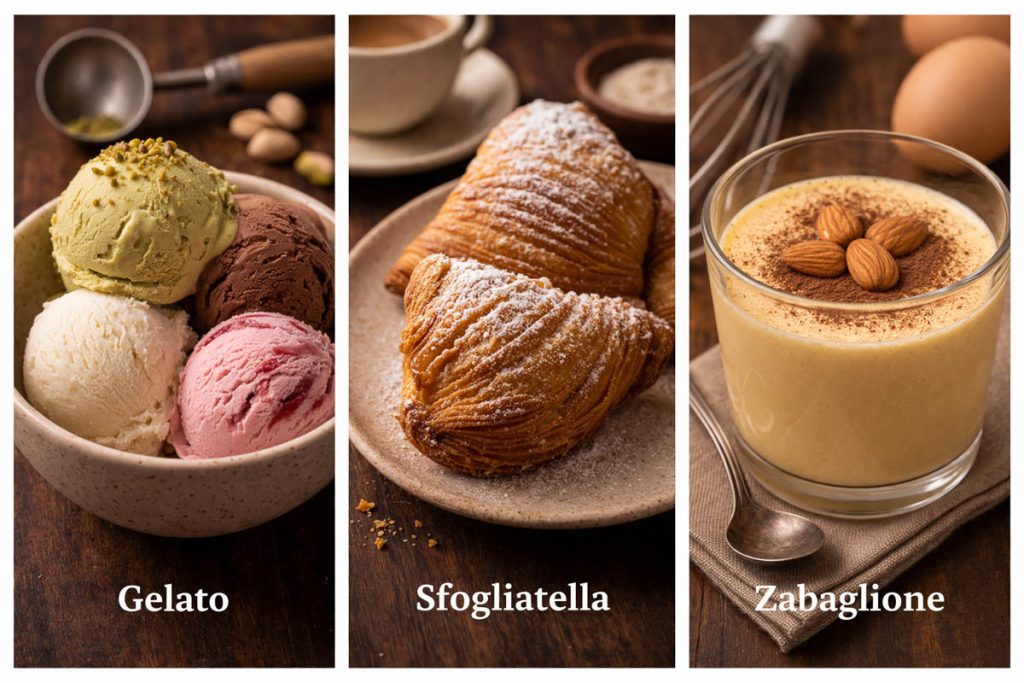
Gelato dates back to Renaissance kitchens where ice and sugar experiments were basically luxury science. It’s churned slower than ice cream, which keeps it dense and smooth without too much air. Flavors go far beyond chocolate and vanilla, with pistachio and hazelnut leading the pack. Walk through any Italian city and you’ll spot bright displays piled high in metal tins.
5. Sfogliatella
- Type: Pastry
- Where to find: Naples
This pastry looks like a seashell and shatters into thin layers when you bite in. It’s filled with ricotta mixed with semolina and citrus peel, giving it a slightly grainy texture that works surprisingly well. Bakers in Naples have been making these for centuries, and the shaping process alone takes skill. You’ll usually find them warm in the morning next to strong coffee.
6. Zabaglione
- Type: Custard
- Where to find: Piedmont region
Zabaglione goes back to at least the 16th century and uses just egg yolks, sugar, and sweet wine. The mixture gets whisked over heat until it turns into a foamy custard with a bit of kick from the alcohol. It’s often served warm with biscuits or fresh fruit. Despite its simplicity, getting the texture right takes patience and a steady hand.
7. Cassata
- Type: Layered cake
- Where to find: Sicily
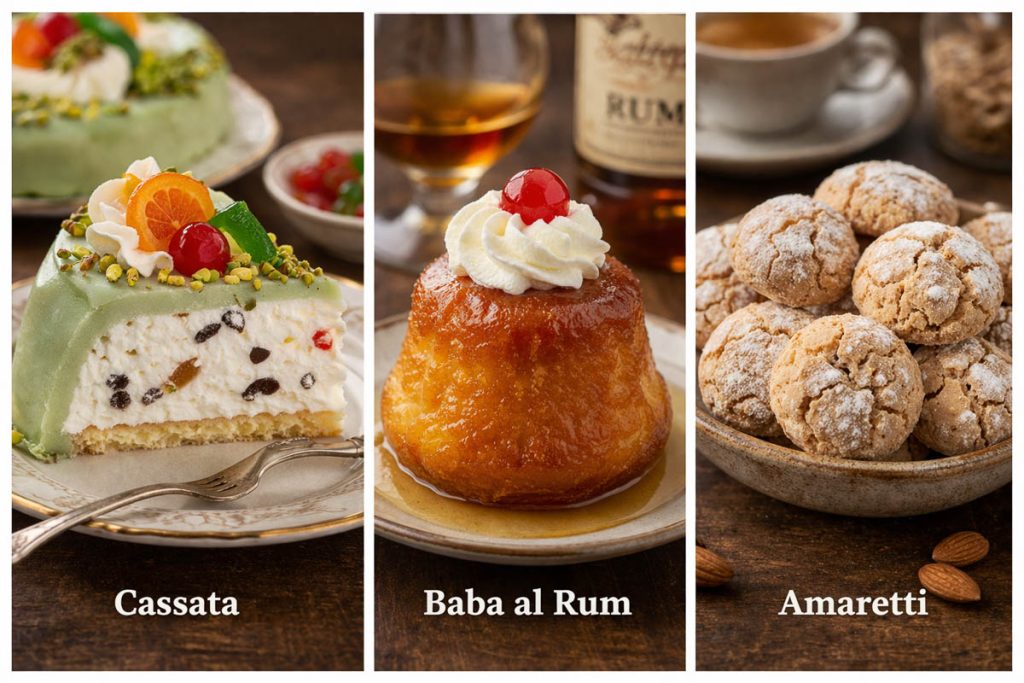
Cassata is loud in both color and flavor, which fits Sicily perfectly. It combines sponge cake, ricotta, marzipan, and candied fruit into a dessert that feels almost over the top. The outside often gets coated in green almond paste and decorated like a celebration. Its roots trace back to Arab influence on the island, especially with the use of sugar and citrus.
8. Baba al Rum
- Type: Soaked cake
- Where to find: Naples
This small cake is soaked in rum syrup until it’s almost dripping. It actually has origins outside Italy but Naples made it their own and never gave it back. The texture is airy so it absorbs liquid without falling apart. Some versions add cream or fruit, but the classic version keeps things focused on that boozy sweetness.
9. Amaretti
- Type: Cookie
- Where to find: Lombardy, especially Saronno
Amaretti cookies are built around almonds or apricot kernels, giving them that slightly bitter edge. They come in two styles, one soft and chewy, the other crisp and crumbly. These cookies date back hundreds of years and are often paired with coffee or dessert wine. Their simple ingredient list hides how much flavor they carry.
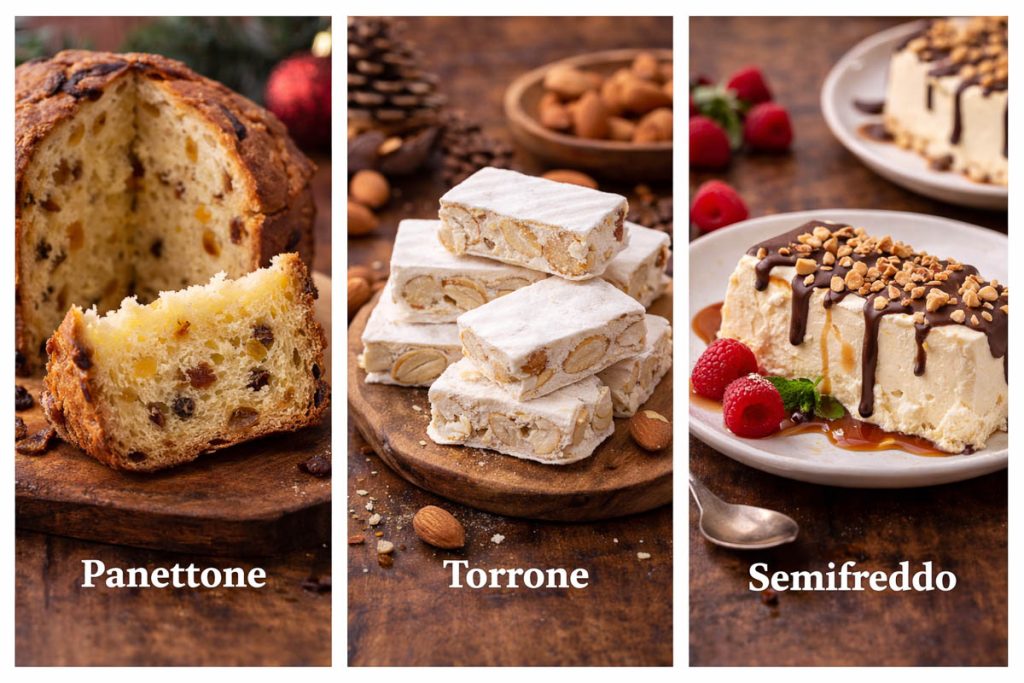
10. Panettone
- Type: Sweet bread
- Where to find: Milan
Panettone shows up around Christmas and takes over bakeries across Italy. It’s tall, fluffy, and packed with raisins and candied citrus. The dough takes days to prepare because of the slow fermentation process. Families either buy it from famous bakeries or argue over which one is best every year.
11. Torrone
- Type: Nougat
- Where to find: Cremona and across Italy
Torrone has been around since Roman times and still shows up at festivals and holidays. It’s made from honey, sugar, egg whites, and nuts pressed into bars. Some versions are soft and chewy while others are hard enough to crack. Almonds are the classic choice, though pistachios appear in southern regions.
12. Semifreddo
- Type: Frozen dessert
- Where to find: Nationwide
Semifreddo sits somewhere between mousse and ice cream. It’s frozen but stays soft enough to slice, thanks to whipped cream folded into the base. Chocolate, nuts, and fruit all show up in different versions. It feels lighter than gelato but still satisfies that cold dessert craving.
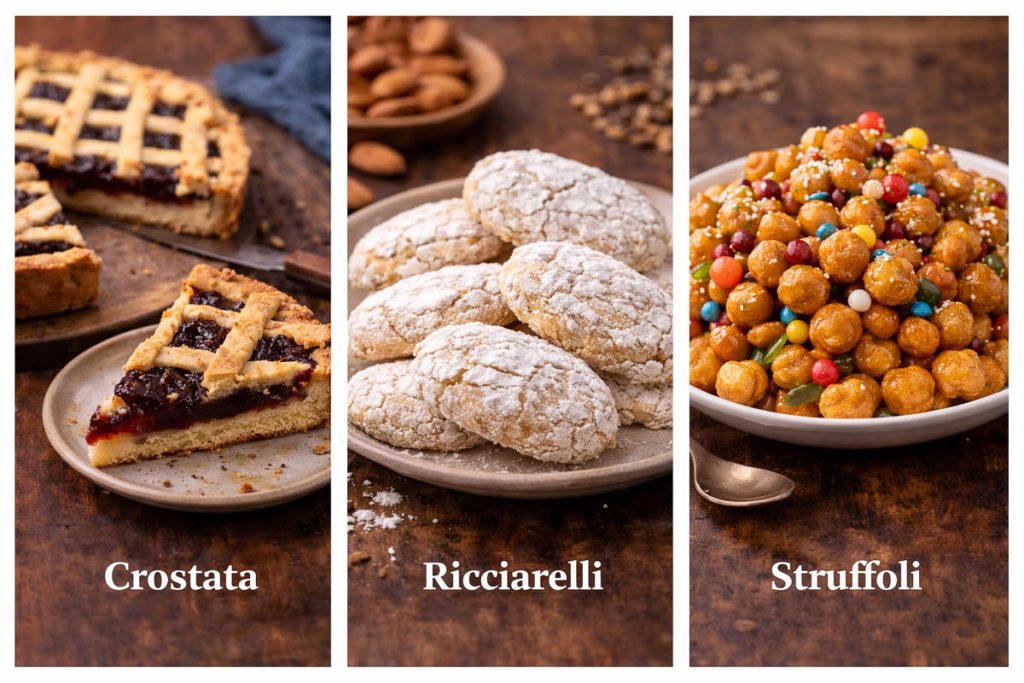
13. Crostata
- Type: Tart
- Where to find: Nationwide
Crostata is what you’ll find in Italian homes as much as in bakeries. It’s a simple pastry crust filled with jam, chocolate, or ricotta, then topped with a lattice pattern. Recipes vary by region and even by family. It’s the kind of dessert that shows up at breakfast just as often as after dinner.
14. Ricciarelli
- Type: Almond cookie
- Where to find: Siena
These soft almond cookies are shaped like little diamonds and dusted with powdered sugar. They date back to medieval times and still follow similar recipes today. The texture is chewy with a slightly crisp outside. Siena takes pride in them, especially during the holiday season.
15. Struffoli
- Type: Fried dough balls
- Where to find: Naples
Struffoli look like tiny golden marbles piled into a mound and coated in honey. They’re traditionally made during Christmas and often decorated with colorful sprinkles. The dough gets fried first, then tossed in warm honey until everything sticks together. It’s messy to eat but that’s part of the fun.
Catherine Xu is the founder and author of Nomadicated, an adventure travel blog that helps travelers cross off their bucket list. Since discovering traveling in 2015, she has lived and journeyed to 65 countries across 5 continents and vanlifed the west coast USA for 2+ years. These days, she splits her time in Southeast Asia and California while sharing her travel stories and resources based on first-hand experiences. Catherine's other works has been referenced in major publications like MSN, Self, and TripSavvy.