
20 Traditional Turkish Food Favorites Locals Can’t Live Without
Most visitors land expecting endless kebabs, but centuries of empire shaped the way people eat in Turkey. Ottoman palace kitchens once fed thousands a day, pulling in spices from the Silk Road and techniques from Central Asia, the Middle East, and the Mediterranean.
That mix never really settled into one traditional Turkish food style, which is why the food shifts so much from one region to the next. Coastal areas lean toward olive oil and seafood, while inland cities build meals around meat, grains, and slow-cooked dishes.
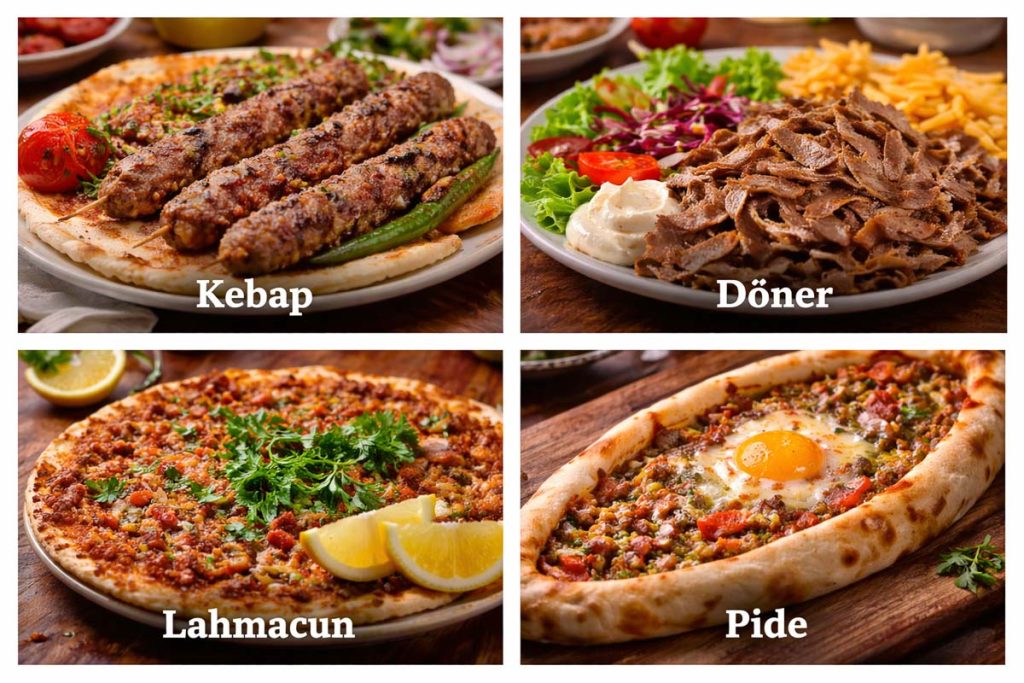
1. Kebap
- Type: grilled meat dish
- Where to find: nationwide, especially Adana and Gaziantep
Kebap sits at the center of Turkish food culture, with dozens of regional styles that go back centuries to Ottoman kitchens. Adana kebap uses hand-minced lamb mixed with chili and grilled over charcoal, while Urfa versions skip the heat and lean into a deeper meat flavor. The method matters just as much as the seasoning, with wide metal skewers and open flames shaping the final taste. It is usually served with flatbread, grilled vegetables, and sharp onions on the side.
2. Döner
- Type: vertical rotisserie meat
- Where to find: nationwide, especially Istanbul
Döner is one of Turkey’s most recognized street foods, built on stacked layers of meat slowly turning beside a heat source. The outer layer crisps while the inside stays juicy, then gets shaved off in thin slices. It dates back to the 19th century and later spread worldwide, inspiring countless variations. In Turkey, it often comes tucked into bread or plated with rice and yogurt.
3. Lahmacun
- Type: thin flatbread with minced meat topping
- Where to find: southeastern Turkey, especially Şanlıurfa
Lahmacun is a crisp round flatbread topped with a finely chopped mix of meat, tomatoes, herbs, and spices. It is baked quickly at high heat, giving it a light texture with slightly charred edges. Locals squeeze lemon over it and roll it up with parsley and onions before eating. Its roots trace back to ancient Middle Eastern baking traditions that predate modern Turkey.
4. Pide
- Type: boat-shaped flatbread with toppings
- Where to find: nationwide, especially along the Black Sea region
Pide is often called Turkish pizza, though its shape and preparation set it apart. The dough forms a long oval, filled with cheese, meats, or eggs, then baked until the edges turn golden. Black Sea towns are known for their versions, especially ones loaded with melted cheese. It is sliced and shared, often fresh out of a wood-fired oven.
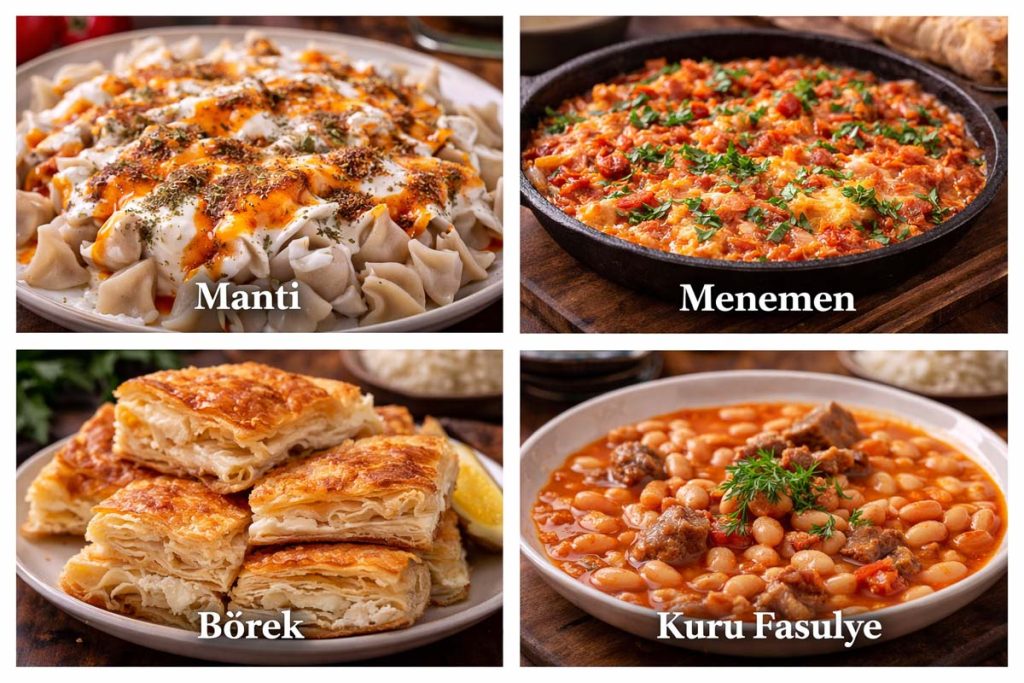
5. Manti
- Type: dumplings filled with meat
- Where to find: central Anatolia, especially Kayseri
Manti are tiny dumplings packed with spiced ground meat and boiled before being topped with yogurt and melted butter infused with paprika. Kayseri is known for making them especially small, sometimes dozens in a single spoonful. The dish reflects Central Asian influences carried by Turkic migrations centuries ago. Garlic yogurt and chili butter create a strong contrast of flavors.
6. Menemen
- Type: scrambled eggs with tomatoes and peppers
- Where to find: nationwide
Menemen is a breakfast staple built on eggs cooked gently with tomatoes, green peppers, and olive oil. Some versions include cheese or sucuk sausage, but the base stays simple and fresh. It is usually cooked in a shallow pan and eaten directly from it with bread. The dish is tied closely to Turkish morning routines and shared tables.
7. Börek
- Type: layered pastry with fillings
- Where to find: nationwide
Börek uses thin sheets of dough layered with fillings like cheese, spinach, or minced meat, then baked or fried. Its origins stretch back to the Ottoman Empire, with variations across the Balkans and Middle East. Each region shapes it differently, from rolled spirals to thick trays. The texture ranges from crisp and flaky to soft and dense depending on the style.
8. Kuru Fasulye
- Type: white bean stew
- Where to find: nationwide
Kuru fasulye is a slow-cooked bean dish often made with tomato paste, onions, and sometimes chunks of meat. It is considered comfort food and frequently paired with rice and pickles. The dish gained popularity during the Ottoman period and remains a staple in home kitchens. Simple ingredients come together into a filling and hearty meal.
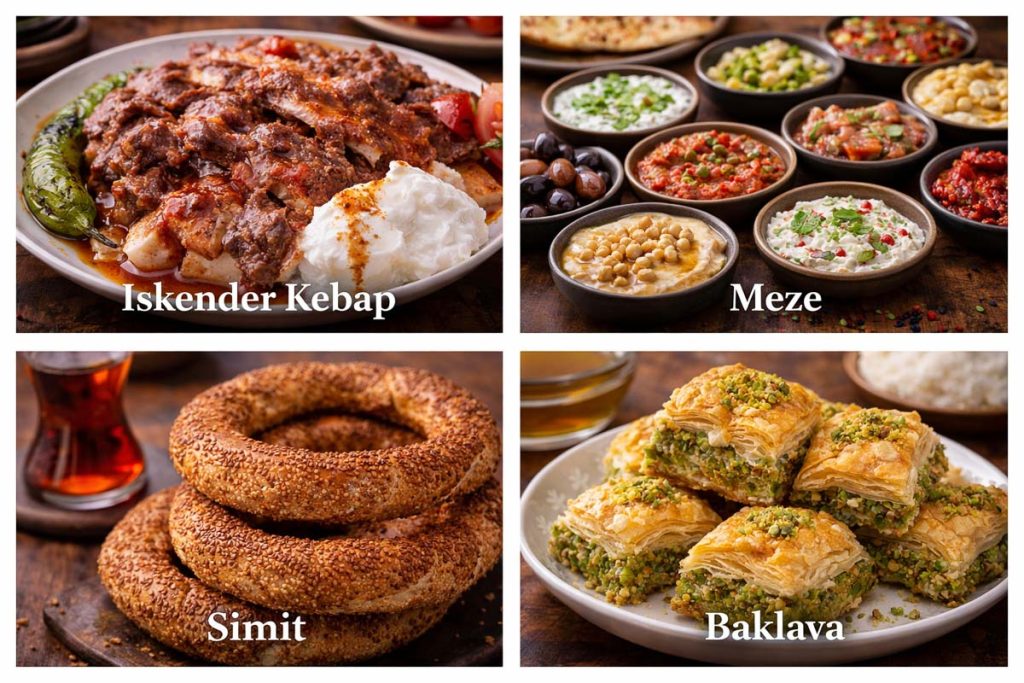
9. İskender Kebap
- Type: sliced döner with bread and yogurt
- Where to find: Bursa
İskender kebap builds on döner by layering sliced meat over pieces of flatbread, then adding yogurt and hot tomato sauce. Melted butter is poured on top just before serving, giving it a rich finish. It was created in Bursa in the 19th century and still carries the name of its inventor. The combination balances crisp meat, soft bread, and tangy yogurt.
10. Meze
- Type: assortment of small dishes
- Where to find: nationwide, especially coastal regions
Meze refers to a spread of small plates served before a main meal, often alongside drinks. Dishes include dips like hummus, eggplant salads, and yogurt-based mixtures. The tradition emphasizes sharing and long meals rather than a single main dish. Coastal areas lean heavily on seafood-based meze varieties.
11. Simit
- Type: sesame-crusted bread ring
- Where to find: nationwide, especially Istanbul streets
Simit is a circular bread coated in sesame seeds and baked until crisp on the outside. Street vendors sell it from carts, making it one of the most accessible snacks in Turkey. It has been part of daily life since Ottoman times, often eaten with tea. The texture lands between a bagel and a crusty loaf.
12. Baklava
- Type: layered pastry dessert with nuts and syrup
- Where to find: southeastern Turkey, especially Gaziantep
Baklava features thin layers of pastry filled with pistachios or walnuts, soaked in sweet syrup. Gaziantep is famous for its pistachio version, widely considered the benchmark. The dessert dates back to imperial Ottoman kitchens where it was prepared for special occasions. Each bite combines crisp layers with a sticky sweetness.
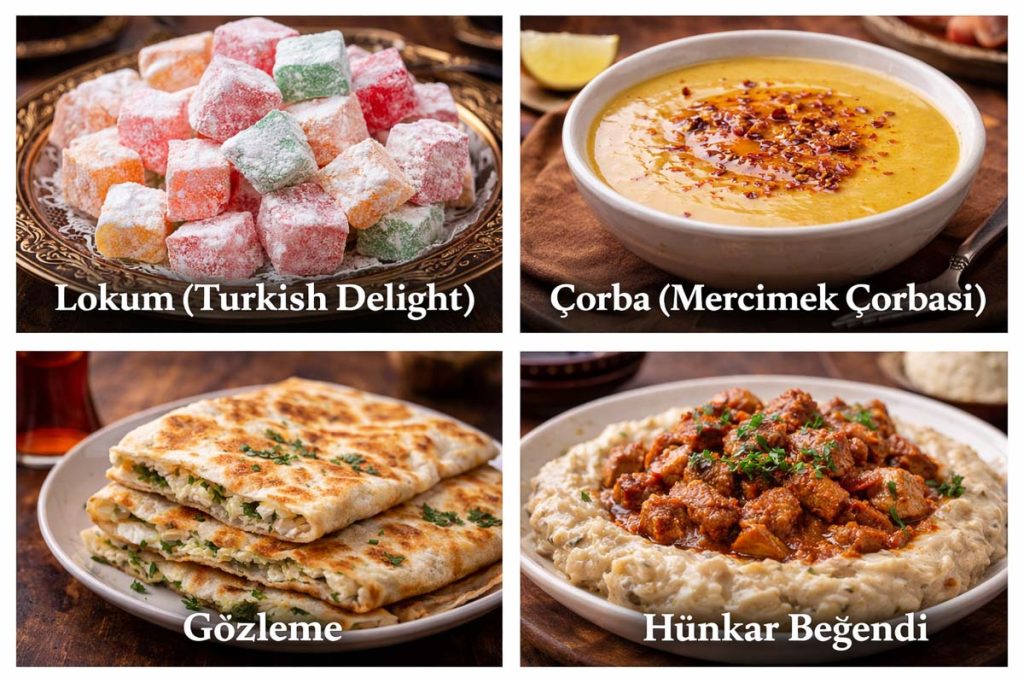
13. Lokum (Turkish Delight)
- Type: sugar-based confection
- Where to find: nationwide
Lokum is a soft, chewy sweet made from sugar, starch, and flavorings like rosewater or citrus. It often includes nuts and is dusted with powdered sugar. The treat became popular in the Ottoman court and later spread across Europe. It is commonly served with coffee as a small bite.
14. Çorba (Mercimek Çorbası)
- Type: lentil soup
- Where to find: nationwide
Mercimek çorbası is a smooth lentil soup that appears on nearly every Turkish table. Red lentils are cooked with onions, carrots, and spices, then blended into a thick consistency. It is often served with lemon and bread. The dish is valued for being both simple and filling.
15. Gözleme
- Type: stuffed flatbread cooked on a griddle
- Where to find: rural areas and markets nationwide
Gözleme is made by rolling thin dough, filling it with ingredients like spinach, cheese, or potatoes, then cooking it on a hot griddle. It is traditionally prepared by hand in village settings and open-air markets. The dough crisps lightly while the inside stays soft. It remains closely tied to home-style cooking and regional traditions.
16. Hünkar Beğendi
- Type: braised meat over eggplant purée
- Where to find: Istanbul and former Ottoman regions
Legend says this dish was created in the Ottoman palace and literally means “the sultan liked it.” It pairs slow-cooked lamb with a creamy eggplant base blended with butter and cheese. The technique reflects palace cooking where French influence briefly mixed into traditional recipes. It still carries that old imperial identity, showing up in restaurants that focus on classic Ottoman dishes.
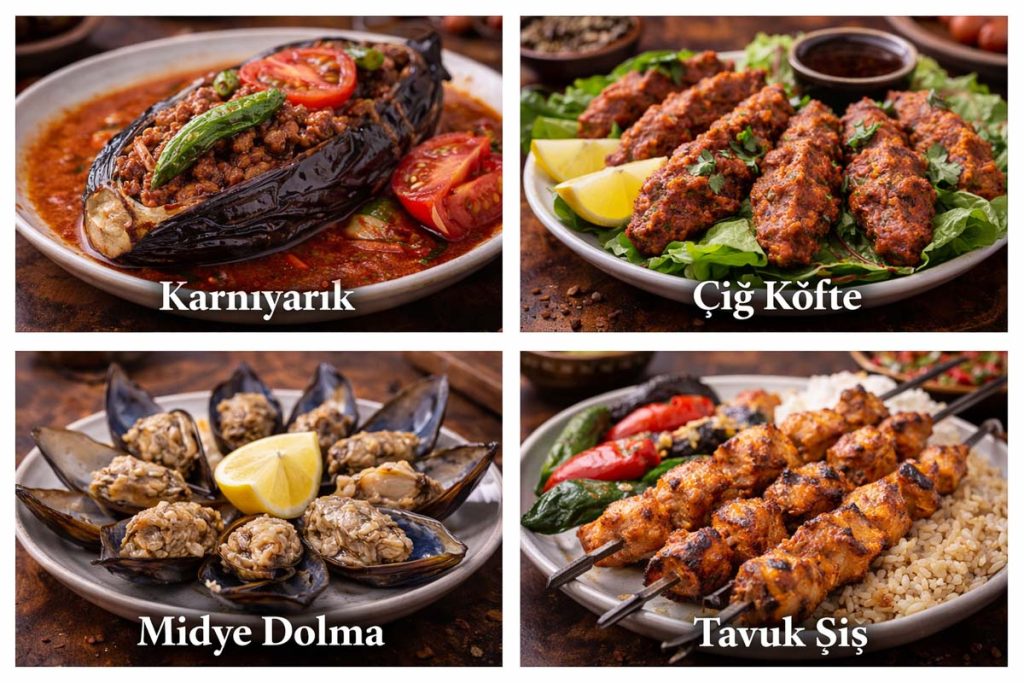
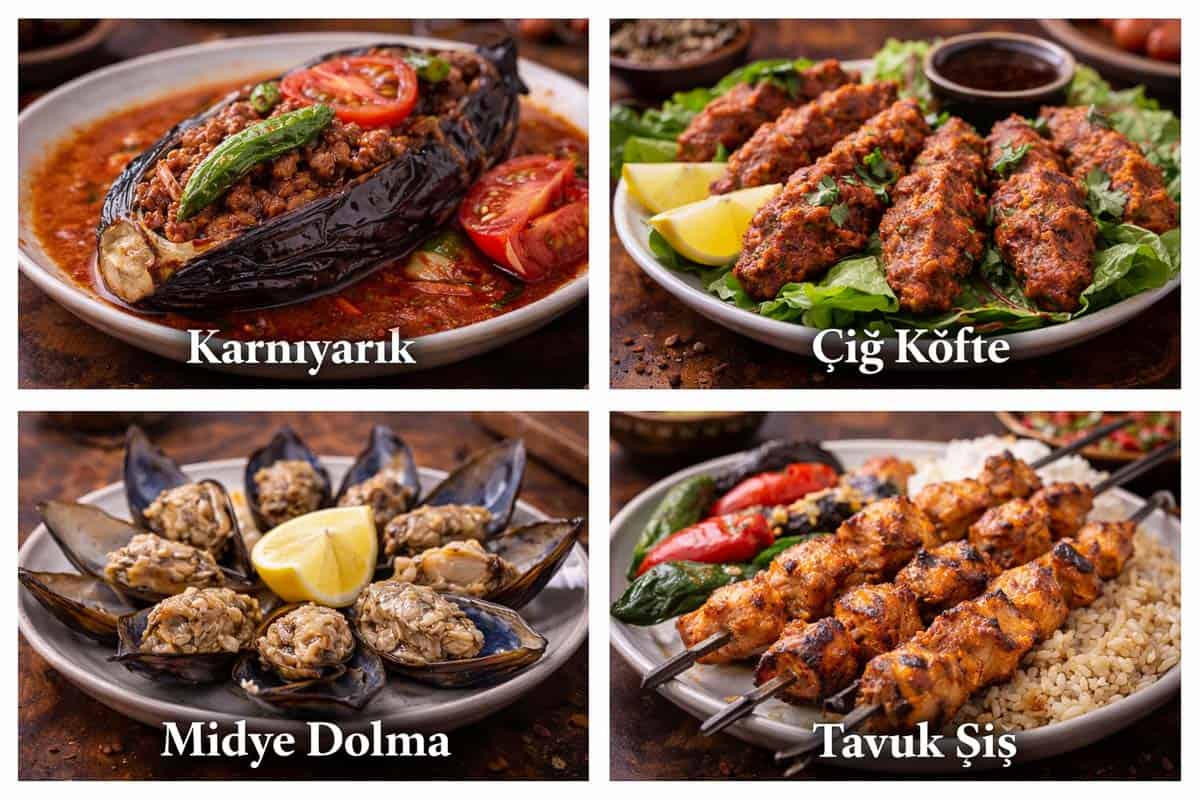
17. Karnıyarık
- Type: stuffed eggplant with minced meat
- Where to find: nationwide
Karnıyarık centers on eggplants split and filled with a mixture of minced meat, onions, and tomatoes. It is then baked until the vegetables soften and absorb the juices. The name translates loosely to “split belly,” which matches its appearance. It is a staple in home cooking and often served with rice on the side.
18. Çiğ Köfte
- Type: spiced bulgur and raw meat mixture
- Where to find: southeastern Turkey, especially Şanlıurfa
Çiğ köfte originally used raw minced meat kneaded with bulgur, spices, and pepper paste. Due to modern regulations, most versions today skip the meat and focus on the seasoned bulgur. The mixture is shaped by hand into small portions and served with lettuce and lemon. Its preparation relies on kneading techniques that go back generations.
19. Midye Dolma
- Type: stuffed mussels with spiced rice
- Where to find: coastal cities, especially Istanbul and Izmir
Midye dolma fills mussel shells with rice cooked in spices, currants, and pine nuts. Vendors stack them in trays and serve them one by one with a squeeze of lemon. It is closely tied to street food culture in coastal cities. The balance of briny seafood and aromatic rice defines the dish.
20. Tavuk Şiş
- Type: grilled chicken skewers
- Where to find: nationwide
Tavuk şiş features marinated chicken grilled over open flames on skewers. The marinade usually includes yogurt, oil, and spices that keep the meat tender. It is a lighter alternative to heavier red meat kebabs. Served with bread, rice, and grilled vegetables, it remains a common choice across the country.

Catherine Xu is the founder and author of Nomadicated, an adventure travel blog that helps travelers cross off their bucket list. Since discovering traveling in 2015, she has lived and journeyed to 65 countries across 5 continents and vanlifed the west coast USA for 2+ years. These days, she splits her time in Southeast Asia and California while sharing her travel stories and resources based on first-hand experiences. Catherine's other works has been referenced in major publications like MSN, Self, and TripSavvy.