
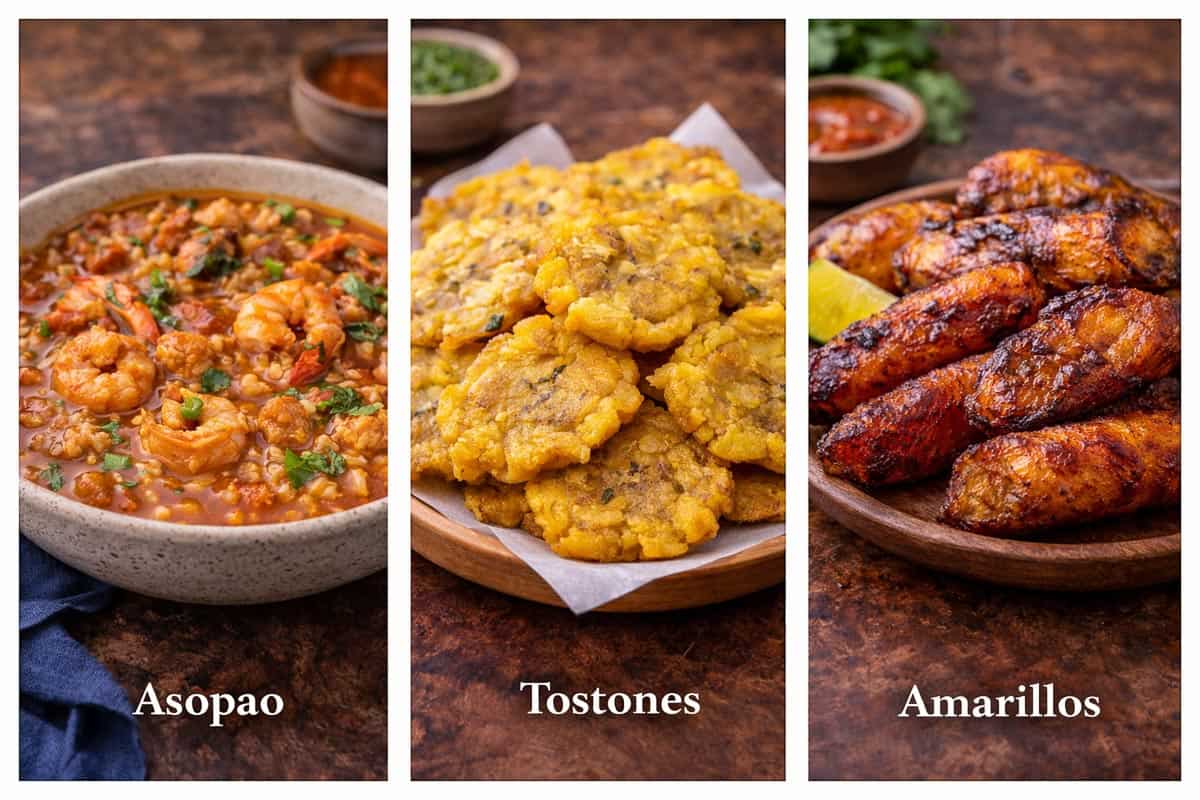
15 Traditional Puerto Rican Food Dishes That Bring the Island to Your Plate
Traditional Puerto Rican food flavors trace back to Taíno roots, layered with Spanish influence and West African techniques. Pork, plantains, rice, and sofrito show up again and again, forming the backbone of daily meals and big celebrations.
There’s a well known stereotype that everything is heavy, fried, and centered around meat, and honestly, there’s some truth to it, but it misses how much care goes into slow cooking, seasoning, and tradition. Food here is tied to family, loud gatherings, and recipes that just passed along in the kitchen.
1. Mofongo
- Type: mashed fried plantain dish with garlic and pork
- Where to find: nationwide
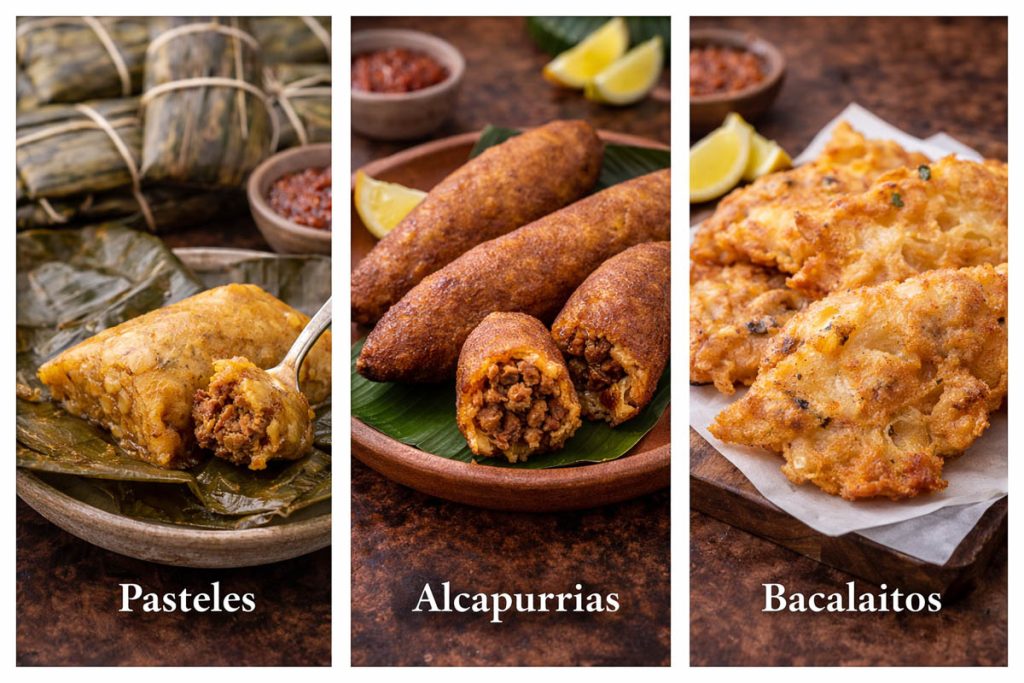
Puerto Rico’s most recognized plate comes straight out of African influence mixed with Spanish flavors. Green plantains get fried, then mashed with garlic, olive oil, and crispy pork bits in a wooden pilón. It often shows up stuffed with shrimp, chicken, or broth, turning it into a full meal. Restaurants across the island treat it as a signature item, and locals judge a place quickly based on how well it’s done.
2. Lechón Asado
- Type: slow roasted whole pig
- Where to find: Guavate and central mountain regions
Whole pigs roast for hours over open flames, usually for weekend gatherings and holidays. The skin turns crisp while the meat stays juicy and heavily seasoned with garlic and oregano. Guavate is known as the pork highway, where roadside spots compete for attention. People line up early since once it’s gone, that’s it for the day.
3. Arroz con Gandules
- Type: rice with pigeon peas
- Where to find: nationwide
This dish anchors most celebrations, especially during Christmas. Rice cooks with pigeon peas, sofrito, pork, and spices until everything blends into one pot. The color comes from annatto oil, giving it that warm orange tone. It is rarely served alone and usually sits next to roasted meats or fried sides.
4. Pasteles
- Type: plantain and root vegetable dough filled with meat
- Where to find: nationwide, especially holidays
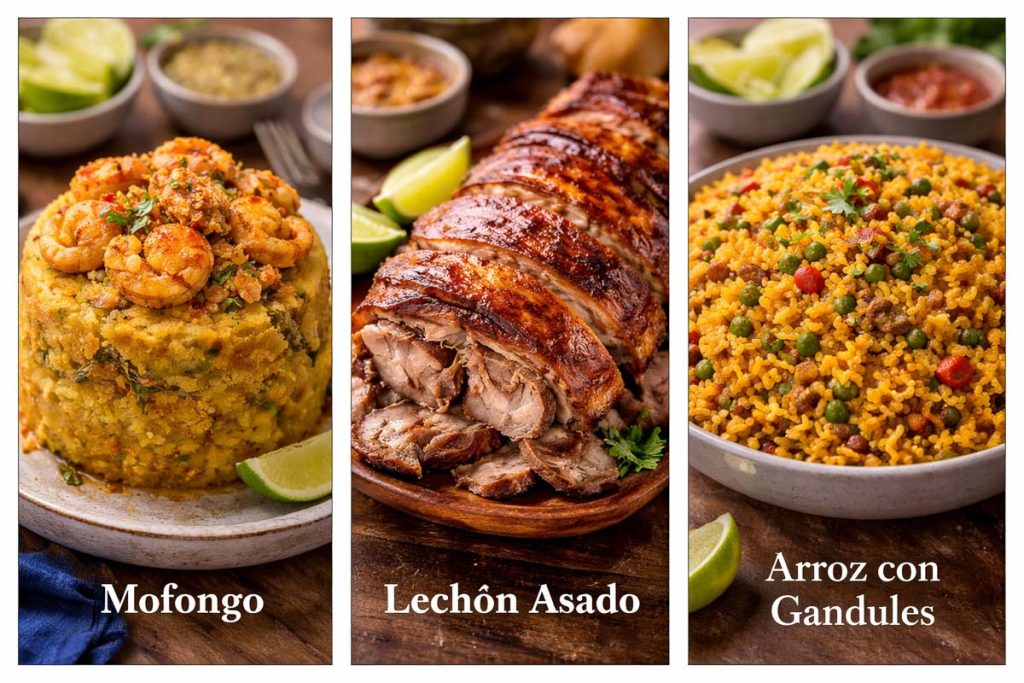
Making pasteles is a full day activity that often turns into a family event. The dough comes from grated green bananas, yautía, and squash, then gets filled with seasoned pork. Each one is wrapped in banana leaves and boiled. The process has deep roots tied to both Indigenous and African traditions.
5. Alcapurrias
- Type: fried fritter filled with meat
- Where to find: coastal towns and street vendors
Street vendors along the coast serve these hot and fresh, often right near the beach. The dough blends green banana and yautía, giving it a slightly dense texture. Inside, there’s usually ground beef or crab filling. They are shaped by hand and fried until golden, then eaten straight out of a paper wrapper.
6. Bacalaitos
- Type: crispy codfish fritters
- Where to find: coastal regions and kiosks
These thin, wide fritters come from salted cod mixed into a light batter. They fry quickly and come out crisp with uneven edges. Beach kiosks often serve them stacked high, sometimes larger than your hand. The salty flavor pairs well with a cold drink after a long day in the sun.
7. Asopao
- Type: soupy rice stew with meat or seafood
- Where to find: nationwide
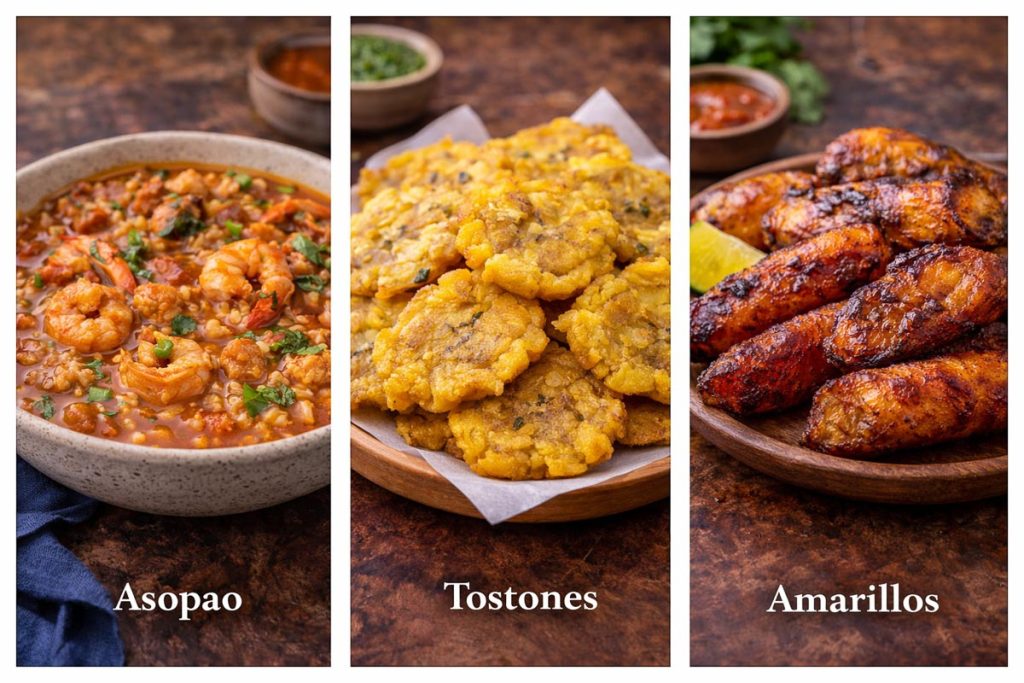
Asopao sits somewhere between soup and rice dish, with a thick broth base. Chicken and seafood versions are the most common, both loaded with herbs and spices. It is a go to comfort meal, especially during rainy days. The texture is meant to be slightly loose, not dry like traditional rice dishes.
8. Tostones
- Type: twice fried green plantains
- Where to find: nationwide
Green plantains get sliced, fried, smashed, and fried again until crisp. They are usually served as a side but can easily take center stage with garlic sauce or dips. You will see them paired with almost any main dish. The texture is crunchy outside with a soft center.
9. Amarillos
- Type: sweet fried ripe plantains
- Where to find: nationwide
Unlike tostones, these use ripe yellow plantains that bring natural sweetness. They caramelize slightly when fried, creating soft slices with golden edges. Many meals include both sweet and savory plantains on the same plate. The contrast balances heavier dishes like pork or stews.
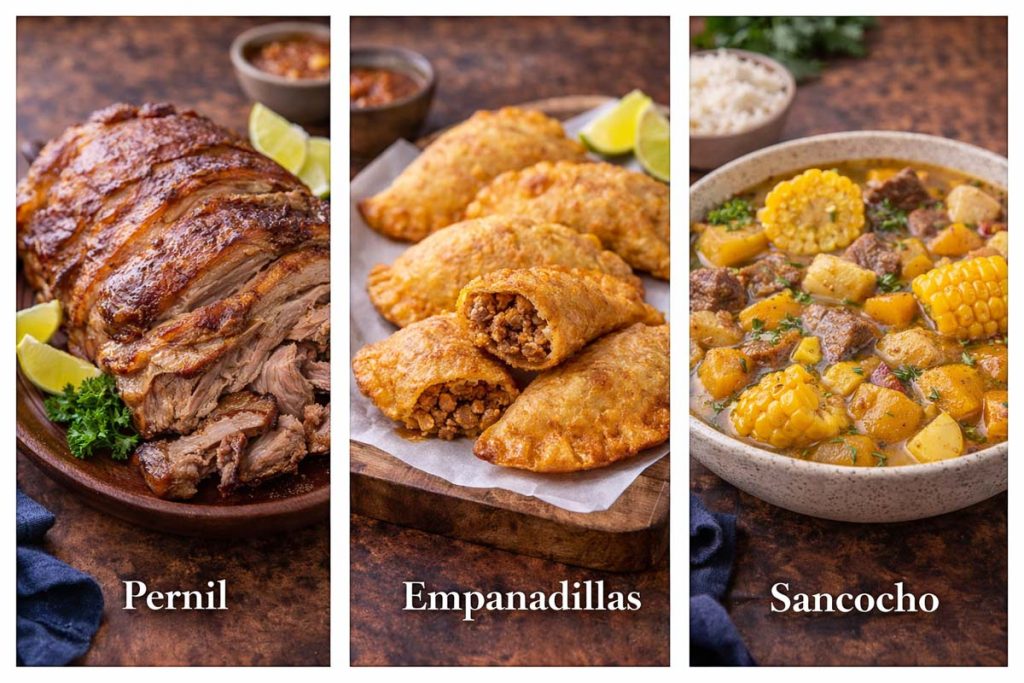
10. Pernil
- Type: roasted pork shoulder
- Where to find: nationwide
Pernil is a holiday staple that rivals lechón in popularity. The pork shoulder is marinated for hours with garlic and spices, then slow roasted. The outer layer crisps up while the inside stays tender. It is often served alongside arroz con gandules during big gatherings.
11. Empanadillas
- Type: stuffed fried turnovers
- Where to find: nationwide
These turnovers come filled with beef, chicken, cheese, or seafood. The dough is thinner than other Caribbean versions, making them lighter and crisp. They are a common snack found at bakeries and roadside stands. Some places seal them with a fork edge, giving them that familiar look.
12. Sancocho
- Type: hearty meat and root vegetable stew
- Where to find: nationwide
Sancocho combines multiple meats with root vegetables like yuca, corn, and potatoes. It cooks slowly to develop a deep, layered flavor. This dish often shows up at family gatherings or special occasions.
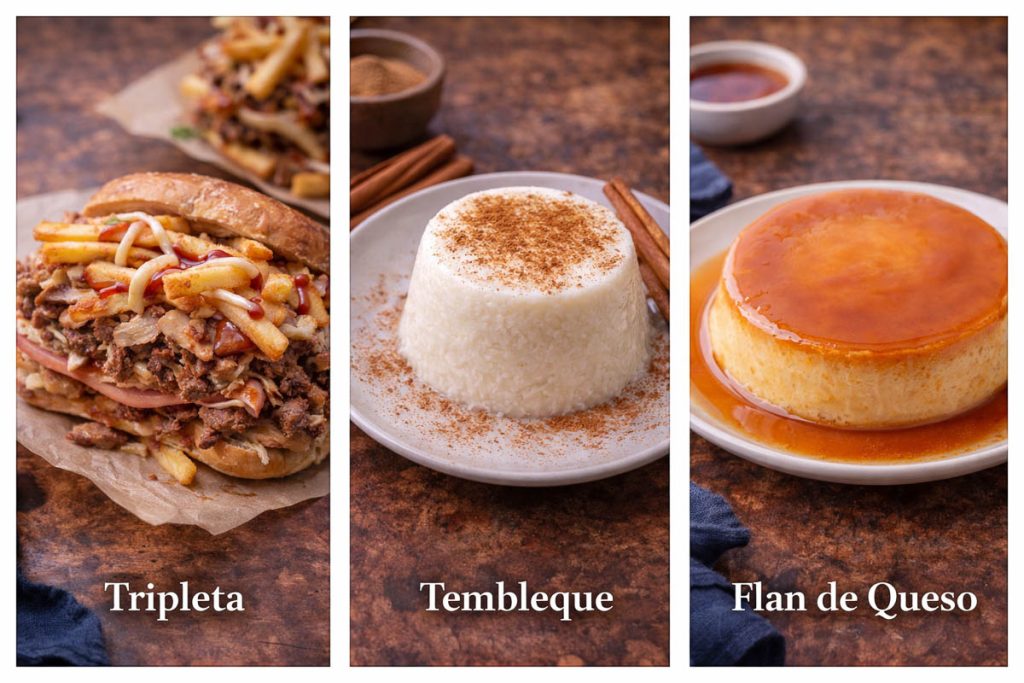
13. Tripleta
- Type: loaded sandwich with three meats
- Where to find: urban areas like San Juan
The name comes from its three main proteins, usually steak, pork, and chicken. It is stacked into a large roll with lettuce, tomato, and sauces. Street vendors make them quickly, with large portions, often late at night.
14. Tembleque
- Type: coconut milk pudding
- Where to find: nationwide
Tembleque gets its name from the slight wobble it has when served. Coconut milk thickens with cornstarch and sugar, then chills until set. Cinnamon is usually sprinkled on top for extra flavor. It is especially common during the holiday season.
15. Flan de Queso
- Type: baked caramel custard with cream cheese
- Where to find: nationwide
This version of flan adds cream cheese, giving it a denser texture than the classic. The caramel layer forms at the bottom during baking, then flips to the top when served. It balances sweetness with a slight tang. Many households have their own version passed down over time.

Catherine Xu is the founder and author of Nomadicated, an adventure travel blog that helps travelers cross off their bucket list. Since discovering traveling in 2015, she has lived and journeyed to 65 countries across 5 continents and vanlifed the west coast USA for 2+ years. These days, she splits her time in Southeast Asia and California while sharing her travel stories and resources based on first-hand experiences. Catherine's other works has been referenced in major publications like MSN, Self, and TripSavvy.