
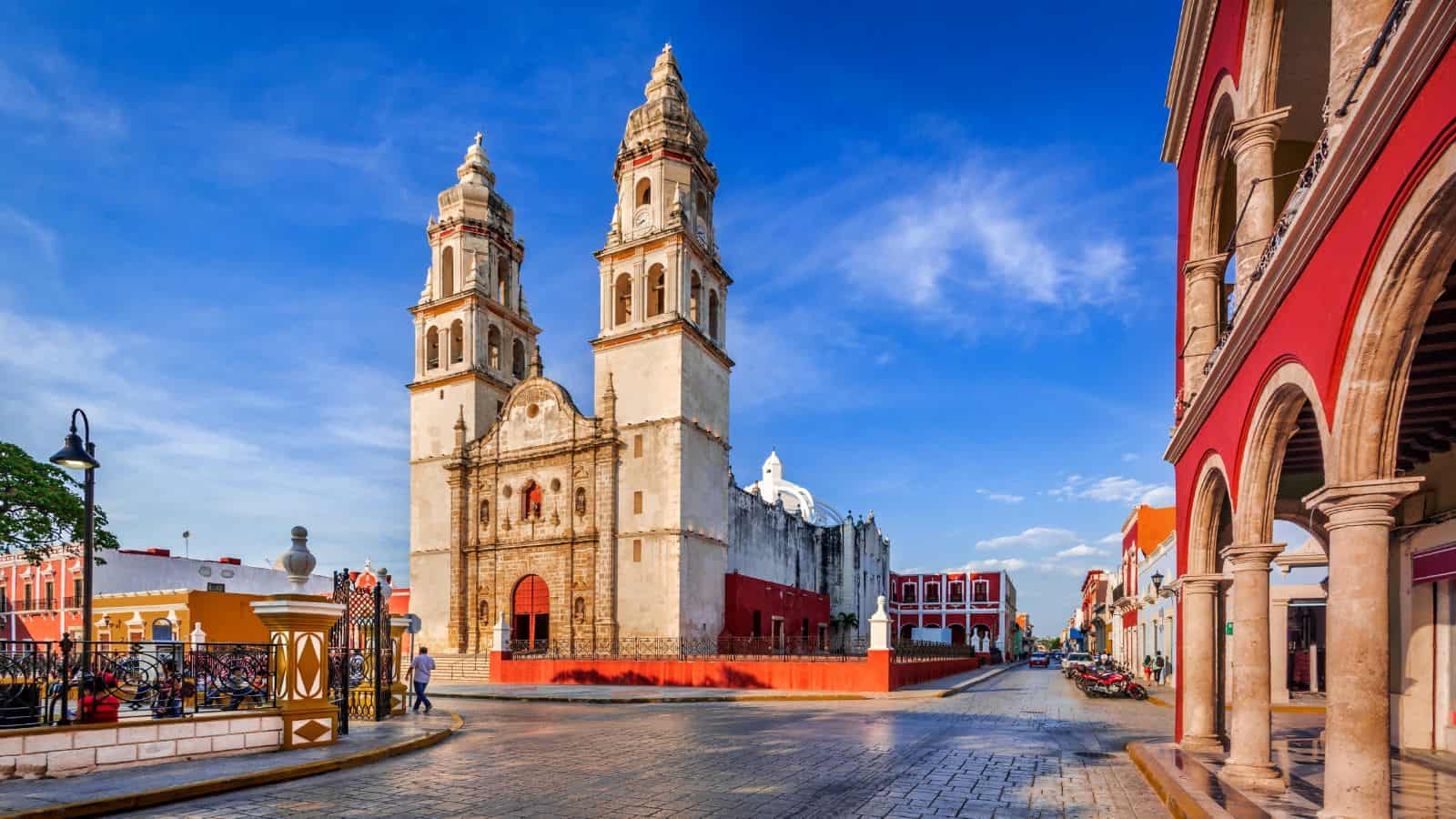
25 Traditional Mexican Dishes Locals Grew Up Loving and Still Crave Today
Mexican kitchens were already grinding corn and chiles thousands of years before Spanish ships showed up. What people now group under traditional Mexican food comes from that mix of Indigenous techniques and colonial ingredients, where corn, beans, and slow-cooked meats never left the spotlight.
There’s a stereotype that everything is heavy, covered in cheese, and blazing hot, but that misses the point completely. A taco stand in Mexico City, a home kitchen in Oaxaca, and a coastal seafood stall in Sinaloa all cook with totally different flavors. The real pattern is built on regional habits, local crops, and recipes that families pass down without ever writing them down.
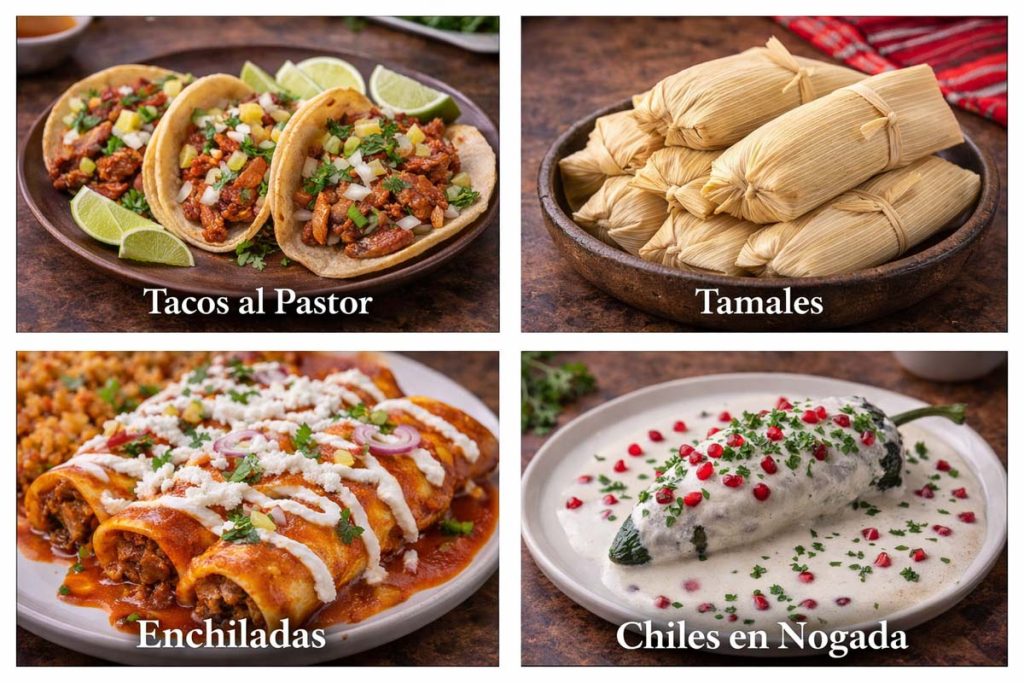
1. Tacos al Pastor
- Type: spit-grilled pork tacos
- Where to find: nationwide, especially Mexico City
Street stands across the country keep rotating towers of marinated pork, a method brought by Lebanese immigrants in the early 1900s. The meat gets shaved straight onto small corn tortillas and finished with pineapple, onion, and cilantro. Mexico City claims the strongest version, where late-night lines form around taquerías that barely pause between orders. The balance of smoky, sweet, and chili heat defines everyday eating here.
2. Tamales
- Type: masa dough filled and steamed in husks
- Where to find: nationwide, strong in Oaxaca and central Mexico
Tamales go back to pre-Hispanic times when they were portable meals for travelers and warriors. Corn dough wraps around fillings like chicken in salsa verde or pork in red chile, then steams inside corn husks or banana leaves. They show up heavily during holidays like Día de los Muertos and Christmas. Every region tweaks the fillings and wrapping style, so no two areas serve the same version.
3. Enchiladas
- Type: rolled tortillas in chili sauce
- Where to find: nationwide, strong in central Mexico
Corn tortillas get dipped in sauce, rolled around fillings, and topped with more sauce, cheese, and crema. Variations like enchiladas verdes or rojas depend on the chili base. In places like Puebla, mole sometimes replaces the standard sauces. The dish traces back to early Aztec meals that involved tortillas dipped in chili.
4. Chiles en Nogada
- Type: stuffed poblano peppers with walnut sauce
- Where to find: Puebla
This dish was created to celebrate Mexico’s independence in 1821, and its colors match the national flag. Poblano peppers get filled with a mix of meat, fruit, and spices, then covered in a creamy walnut sauce and pomegranate seeds. It’s seasonal and tied closely to late summer. Puebla remains the best place to try the original version.
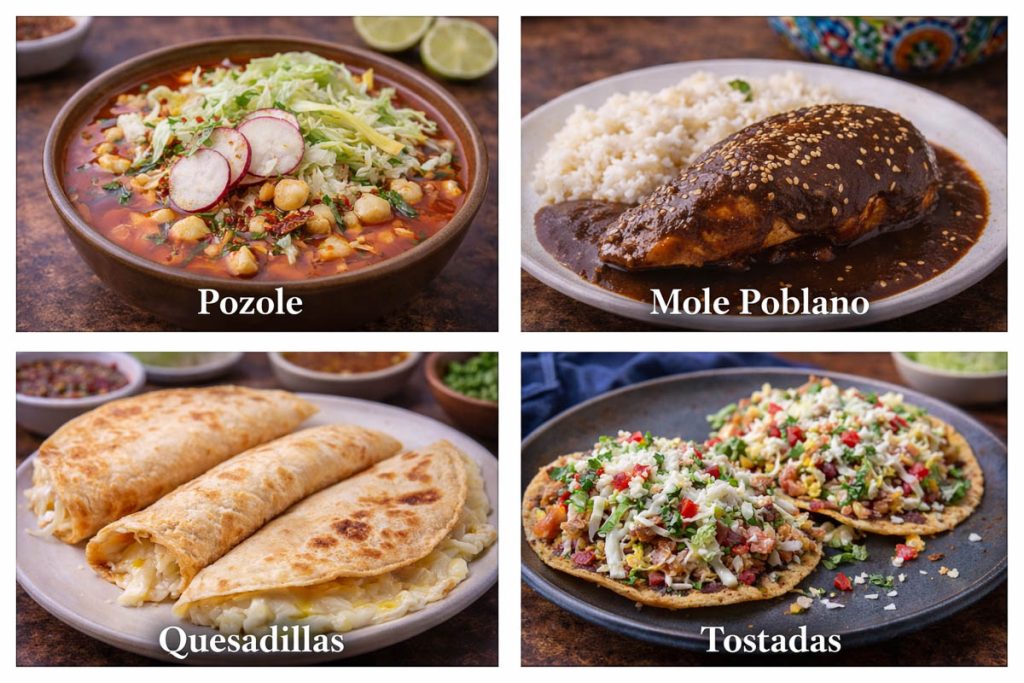
5. Pozole
- Type: hominy soup with meat
- Where to find: nationwide, strong in Guerrero and Jalisco
Pozole dates back to pre-Columbian rituals and has evolved into a celebratory dish served during holidays and gatherings. The soup uses large corn kernels with pork or chicken, then gets topped with lettuce, radish, lime, and oregano. Red, green, and white versions vary by region. It’s filling enough to stand as a full meal.
6. Mole Poblano
- Type: complex chili and chocolate sauce
- Where to find: Puebla
Mole poblano combines dozens of ingredients including dried chiles, spices, nuts, and a hint of chocolate. The sauce simmers for hours before coating chicken or turkey. It reflects a mix of indigenous and Spanish influences. Puebla’s version is the reference point, though other regions have their own moles.
7. Quesadillas
- Type: folded tortilla with melted cheese or fillings
- Where to find: nationwide, especially central Mexico
Quesadillas in Mexico do not always include cheese, which surprises plenty of visitors. They are usually cooked on a comal and filled with squash blossoms, mushrooms, or meats, then folded and toasted. In Mexico City, vendors often fry them for a crisp exterior. The name comes from Spanish influence, but the technique ties back to indigenous cooking traditions.
8. Tostadas
- Type: crispy fried tortilla topped with layered ingredients
- Where to find: nationwide
A tostada starts with a tortilla fried until rigid, then piled high with beans, meats, seafood, lettuce, and crema. It is messy by design and eaten quickly before it softens. Coastal regions favor ceviche on top, while inland areas lean toward chicken or tinga. The crunch is the whole point, and it contrasts with the fresh toppings.
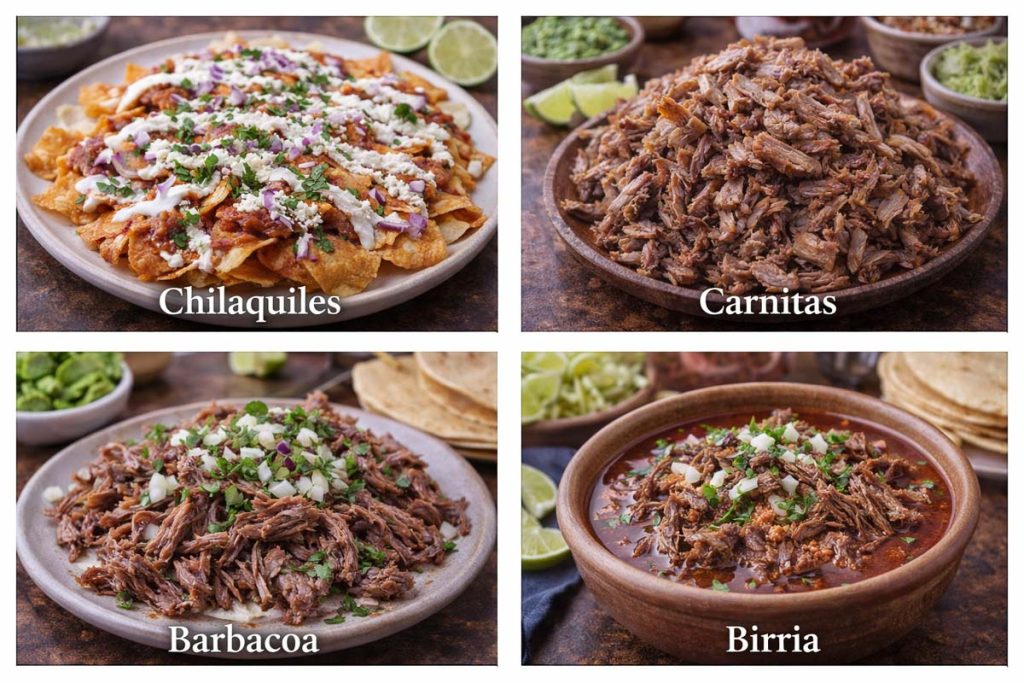
9. Chilaquiles
- Type: tortilla chips simmered in salsa
- Where to find: nationwide
Chilaquiles are a morning staple built from leftover tortillas cut and fried, then tossed in red or green salsa. They are usually finished with crema, cheese, onions, and sometimes eggs or shredded chicken. The dish has roots in practical home cooking, turning scraps into something filling. Texture matters, with some preferring them soft while others keep a bit of crunch.
10. Carnitas
- Type: slow-cooked pork confit
- Where to find: Michoacán and nationwide
Carnitas are made by simmering pork in its own fat until tender, then crisping the edges. The result balances juicy meat with browned bits that add depth. Originating in Michoacán, it is often served by the kilo with tortillas on the side. Every cut of the pig is used, which reflects a long tradition of minimizing waste.
11. Barbacoa
- Type: pit-cooked meat wrapped in leaves
- Where to find: Hidalgo, central Mexico
Barbacoa traces back to pre-Hispanic cooking methods where meat is slow-cooked underground. Lamb is the most common choice, wrapped in maguey leaves and steamed for hours. The juices collect at the bottom and turn into a broth served alongside. It is usually eaten on weekends, often as a family meal.
12. Birria
- Type: spiced meat stew, often goat or beef
- Where to find: Jalisco and nationwide
Birria began as a goat stew in Jalisco, heavily seasoned with dried chilies and spices. The broth is rich and slightly tangy, and the meat is cooked until it pulls apart easily. It is now widely used as a taco filling, especially dipped in the broth before grilling. The dish has gained international attention through its bold flavor.
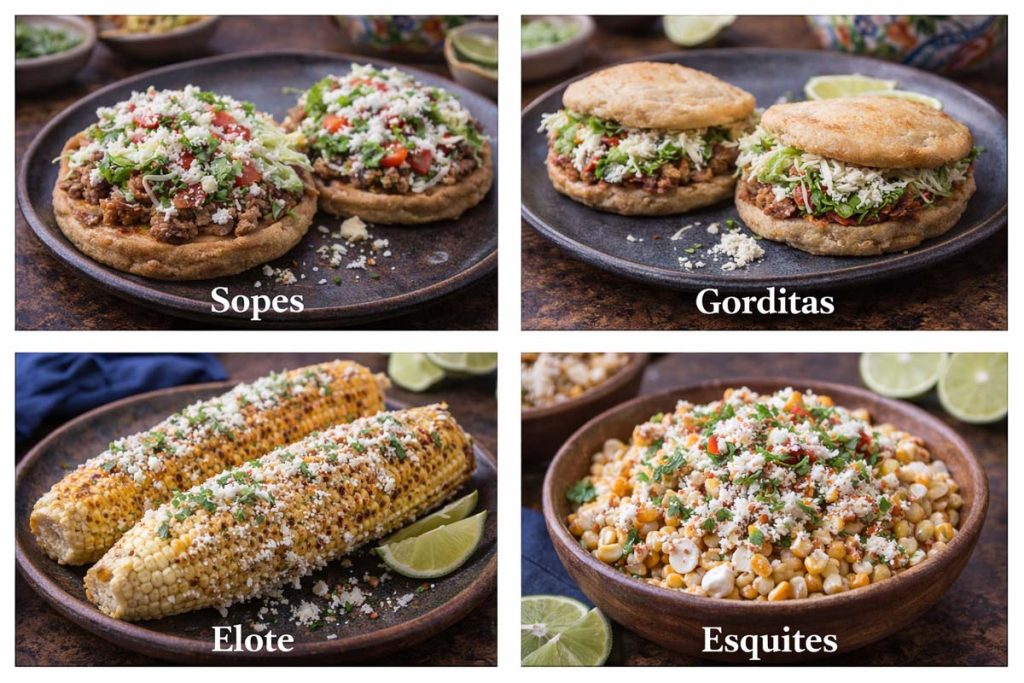
13. Sopes
- Type: thick corn base with raised edges and toppings
- Where to find: central Mexico
Sopes start with a thick masa round pinched at the edges to hold fillings. They are lightly fried, then layered with beans, meat, lettuce, cheese, and salsa. The shape keeps everything contained, making them easier to eat than tostadas. This style dates back to indigenous cooking techniques using corn dough.
14. Gorditas
- Type: stuffed thick corn or wheat pocket
- Where to find: northern and central Mexico
Gorditas are thicker than tortillas and split open to hold fillings like beans, cheese, or meats. Some are fried for a crisp shell while others are cooked on a griddle. Northern regions often use wheat flour versions. The name translates to “little fat ones,” referring to their shape.
15. Elote
- Type: grilled corn on the cob with toppings
- Where to find: nationwide
Elote is street corn coated in mayonnaise, cheese, chili powder, and lime. It is served on a stick for easy handling while walking. Vendors grill the corn to bring out a smoky flavor before adding toppings. It is one of the most recognizable street snacks in Mexico.
16. Esquites
- Type: corn kernels served in a cup with toppings
- Where to find: nationwide
Esquites take the same ingredients as elote but cut the kernels off the cob. The corn is sautéed or boiled, then mixed with lime, mayo, cheese, and chili. It is eaten with a spoon, making it easier to handle. The dish likely evolved as a more convenient version of elote.
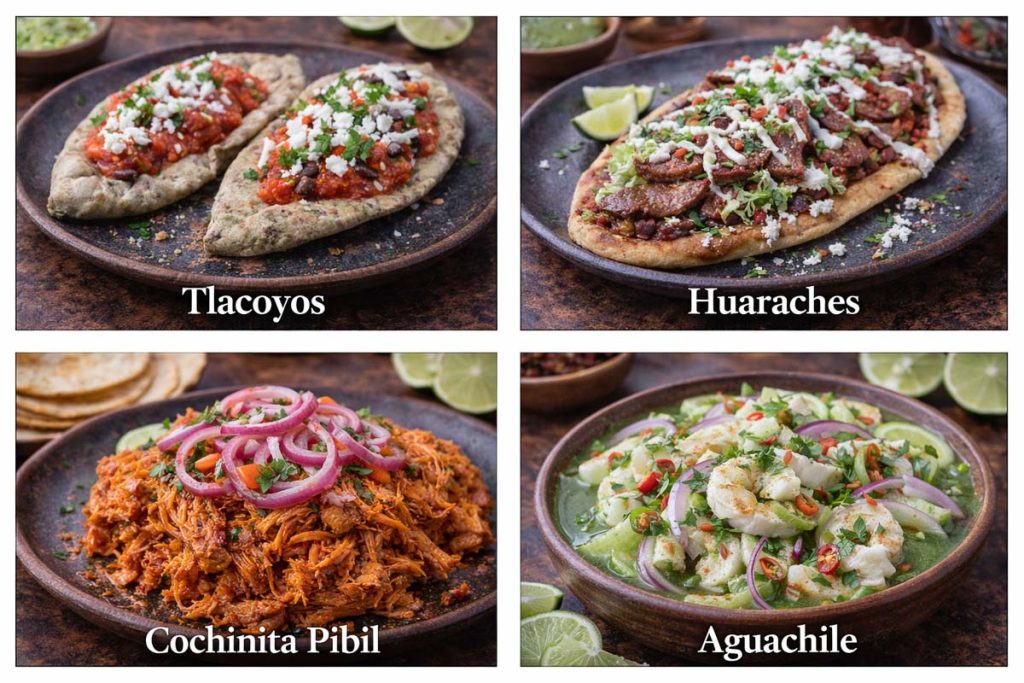
17. Tlacoyos
- Type: oval masa cakes stuffed with beans or cheese
- Where to find: central Mexico
Tlacoyos trace back to pre-Hispanic markets where blue corn masa was shaped by hand and cooked on clay griddles. They are usually filled with fava beans or requesón, then topped with cactus, cheese, and salsa. The texture is denser than a tortilla, which makes them more filling. Street stalls in Mexico City keep this tradition alive with recipes passed through generations.
18. Huaraches
- Type: elongated masa base topped with meat and beans
- Where to find: central Mexico
Named after their sandal-like shape, huaraches stand out for their long oval base made from masa. The base gets layered with refried beans, then grilled meats, lettuce, cheese, and salsa. They became popular in Mexico City markets during the 20th century. The size alone makes them closer to a full meal than a snack.
19. Cochinita Pibil
- Type: slow-roasted pork marinated in achiote
- Where to find: Yucatán Peninsula
Cochinita pibil comes from Mayan cooking traditions in the Yucatán. Pork is marinated in citrus juice and achiote paste, then wrapped in banana leaves and cooked underground. The result is tender meat with a deep red color and a slightly tangy taste. It’s often served with pickled red onions and tortillas.
20. Aguachile
- Type: raw shrimp in chili-lime marinade
- Where to find: Sinaloa and coastal regions
Aguachile is strongly tied to the Pacific coast, especially Sinaloa. Fresh shrimp is mixed with lime juice, chili, and sliced cucumber, creating a sharp and spicy dish. Unlike ceviche, it’s usually prepared quickly and served almost immediately. The heat level can vary, but it tends to lean bold.
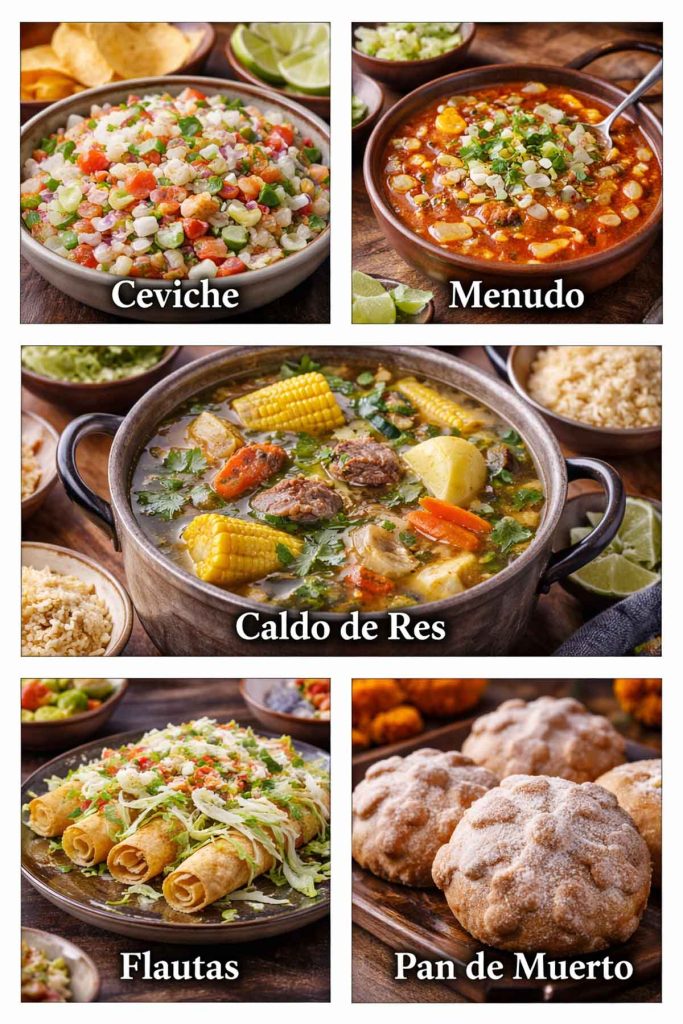
21. Ceviche
- Type: citrus-cured seafood
- Where to find: coastal regions nationwide
Ceviche in Mexico reflects local seafood availability, from shrimp to fish. The citrus juice firms up the seafood while adding brightness. Tomatoes, onion, and cilantro round out the mix. Coastal towns serve it fresh, often with tostadas or crackers.
22. Menudo
- Type: tripe soup in chili broth
- Where to find: northern Mexico
Menudo has a long-standing reputation as a weekend dish, often cooked in large batches. Beef tripe is simmered for hours with hominy and red chili broth. It’s commonly served with lime, onion, and oregano for extra flavor. Many families treat it as a traditional Sunday meal.
23. Caldo de Res
- Type: beef and vegetable soup
- Where to find: nationwide
Caldo de res is a home-style soup built around large cuts of beef and hearty vegetables. Corn on the cob, carrots, potatoes, and cabbage are typical additions. The broth develops slowly as everything cooks together. It’s filling and often served as a full meal rather than a starter.
24. Flautas
- Type: rolled and fried tacos
- Where to find: nationwide
Flautas get their name from their flute-like shape. Tortillas are filled, tightly rolled, and fried until crisp. Chicken or beef are common fillings, and toppings usually include crema, lettuce, and cheese. The crunch sets them apart from softer taco styles.
25. Pan de Muerto
- Type: sweet bread for Day of the Dead
- Where to find: nationwide during Día de los Muertos
Pan de Muerto appears every year around Día de los Muertos, a major Mexican holiday. The bread is soft with a light orange flavor and decorated with dough shaped like bones. It’s placed on altars to honor loved ones who have passed. Bakeries across the country prepare it in large quantities during the season.

Catherine Xu is the founder and author of Nomadicated, an adventure travel blog that helps travelers cross off their bucket list. Since discovering traveling in 2015, she has lived and journeyed to 65 countries across 5 continents and vanlifed the west coast USA for 2+ years. These days, she splits her time in Southeast Asia and California while sharing her travel stories and resources based on first-hand experiences. Catherine's other works has been referenced in major publications like MSN, Self, and TripSavvy.