
How Much Hydration Should You Carry on an Overnight Hiking Trip?
How many liters actually go in the pack for one night out? For most hikers, there isn’t a single number that works for every trip. Weather, terrain, elevation, pace, and access to water can change the calculation considerably. The number that governs the packing decision is the volume needed to reach the next reliable source, plus what camp will consume before morning.
Whether the hike is part of a weekend camping trip or a longer outdoor adventure, that distinction matters. Total consumption across the trip can be much higher than the amount you actually need to carry at any one time.
Consumption Rates for a Day on Foot
A useful working baseline for moderate effort in moderate weather is around 0.5 liters per hour of active walking, but it should be treated as a planning estimate rather than a fixed requirement. Individual needs vary, and heat, steep terrain, a heavy pack, and sustained effort can increase fluid losses considerably.
Time is generally more useful than mileage when planning a water carry. Five miles along a shaded valley with regular streams is a very different hiking day from five exposed miles climbing toward a mountain pass.
Heat can push consumption higher, while elevation can add another consideration because the air is often drier and breathing increases as altitude rises. Cold-weather trips deserve attention too. Hikers may feel less thirsty when temperatures drop even though fluid losses continue.
Before traveling to an unfamiliar hiking area, check the weather forecast, elevation profile, terrain, and expected walking time together. Those details provide a more realistic starting point than mileage alone.
Camp Use After the Walking Stops
Camp consumption is the part most people leave out of the plan. Dinner, drinking water, cleanup, morning coffee, and breakfast can easily add another liter or more per person, depending on the meal, weather, and time spent at camp.
Freeze-dried meals account for a noticeable share of it. Many require roughly two cups per pouch, so dinner can use a significant amount of water before anyone has had anything to drink. Cooking grains or pasta may require more, while hot drinks and breakfast add to the total again.
A hiker planning a dry camp needs that entire figure in the pack, on top of whatever is required to complete the approach from the last reliable water source.
That is easy to overlook when planning an overnight trip from a map. A campsite may look close to a creek without actually having dependable water nearby, particularly later in the season.
Sodium in the Carry Plan
Water is the main concern, but long, sweaty hiking days can also mean losing sodium through sweat. How much varies considerably between people and conditions, while ordinary trail foods already provide sodium for many hikers.
Salted nuts, crackers, cured meats, instant noodles, and packaged camping meals are common options. On prolonged or particularly hot sections of trail, some hikers also prefer having electrolytes available in a drink rather than waiting until the next meal.
There is no single product that suits every hiker or every route. When comparing options for the best electrolyte powder for hydration, look beyond the front of the packet and check the sodium per serving, portion size, and how practical it will be to carry and mix on the trail. Taste matters too; something you don’t want to drink after several hours of walking isn’t especially useful.
There is no reason to carry more electrolyte mix than the trip calls for. Like everything else in an overnight pack, it should earn the space it takes up.
Distance Between Sources and the Dry-Stretch Calculation
The governing measurement is the gap between reliable sources, measured in hours of walking.
Find the dependable water sources on the route before leaving. Identify the longest stretch between two of them, then estimate how many hours that section will take at your actual pace with a loaded pack.
Use your normal drinking rate as a starting point and adjust it for heat, terrain, exposure, elevation, and expected effort. Then add a sensible safety reserve. If the next source is seasonal or recent conditions have been unusually dry, give yourself a larger margin.
That figure becomes a useful estimate of your maximum planned carry. On a route with frequent reliable streams, it may be relatively small. A dry ridgeline, desert section, or remote campsite can require considerably more.
Elevation belongs in the same planning conversation. A route that climbs high enough can introduce concerns such as altitude sickness, while headache, nausea, or loss of appetite can complicate the assumptions made before the trip. Higher routes deserve conservative planning, particularly when arriving from a much lower elevation.
Capacity Versus Fill Volume
There is a useful difference between what a hiker can carry and what a hiker should fill.
Bladders and bottles totaling several liters of capacity provide flexibility for a long dry section without committing to that weight on every stretch of trail. Fill according to the section ahead rather than automatically topping off every container whenever you pass water.
A liter of water weighs roughly one kilogram, so unnecessary water becomes noticeable quickly. Carrying two liters you don’t need means adding about two kilograms to the pack until the next stop.
Empty capacity, on the other hand, weighs relatively little. That makes collapsible bottles and reservoirs particularly useful on hiking trips where one section requires a large carry but the rest of the route has regular water.
For travelers flying or driving to a trail destination, collapsible capacity also takes up little luggage space when empty.
Water Treatment on Well-Sourced Trails
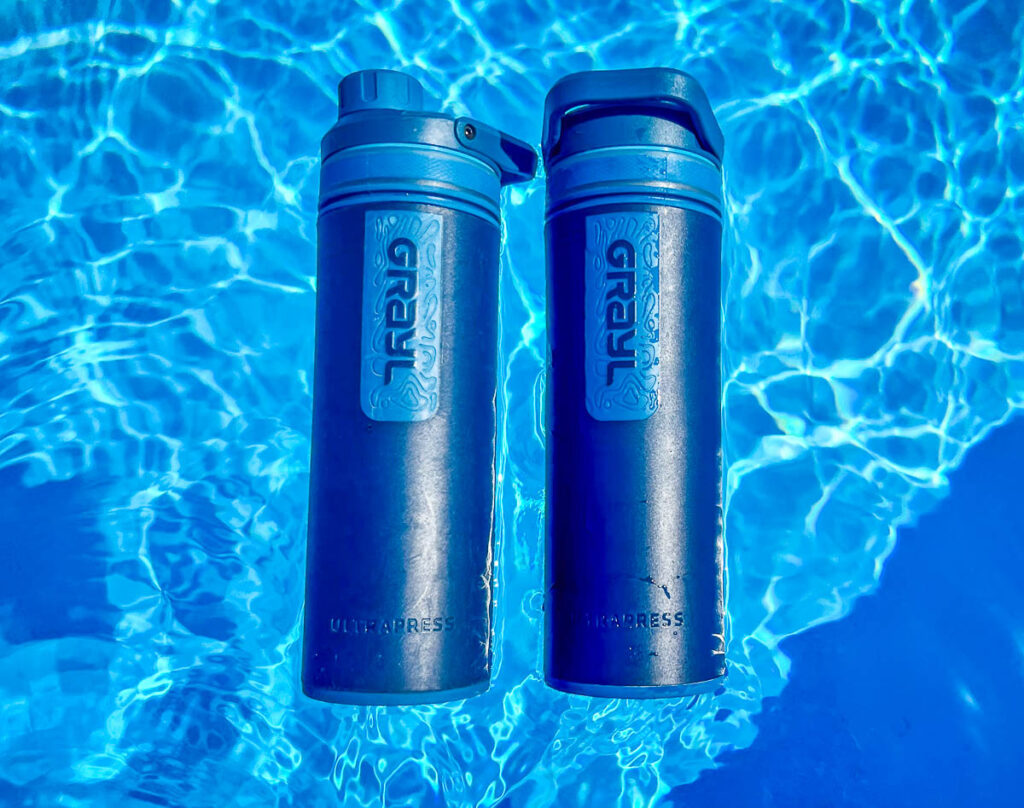
An appropriate water-treatment system can replace liters of carried weight on routes with regular, dependable sources. Instead of hauling the entire trip’s water from the trailhead, hikers can refill as they move through the route.
The important word is dependable.
A stream marked on a map isn’t a guarantee. Seasonal creeks can run dry, springs can slow down, and late-summer conditions may look very different from what another traveler found earlier in the year.
Backcountry water should not automatically be considered safe simply because it looks clear. Appropriate stream treatment depends on the water source and the system being used, so choosing how you’ll treat water should be part of the trip plan rather than an afterthought.
The exceptions are ridgelines, desert sections, and late-season routes where mapped sources may fail. In those places, the required volume has to come out of the pack, and the dry-stretch calculation becomes particularly important.
Current trail reports can be invaluable. A June report saying a creek was flowing may tell you very little about what you’ll find there in August. When hiking somewhere unfamiliar, recent local information is much more useful than assuming the map tells the whole story.
Group Size and Shared Camp Volume
Cooking volume scales with the number of people eating, and the water used for drinks, dinner, and breakfast increases with group size. A party sharing a dry campsite can therefore go through several liters without anyone walking another mile.
Split the shared camp requirement across the group before anyone fills a bottle at the last source. Spreading several liters between multiple packs is more practical than asking one person to carry the entire camp supply.
It also creates useful redundancy. If someone falls behind on the final climb or the group becomes temporarily separated, the entire shared water supply isn’t sitting in one backpack.
Personal drinking water should still be planned around each hiker’s needs. Sharing cooking water doesn’t mean everyone in the group will drink at the same rate.
One Night, One Number
Before the trip, find the longest gap between reliable sources on your route and estimate how many hours it will take to cross. Adjust for weather, terrain, elevation, exposure, and your own drinking habits, then add a sensible safety margin.
If you’re dry camping, add the water needed for dinner, drinking at camp, breakfast, and whatever you’ll need before reaching the next dependable source in the morning.
That number—not the total amount you’ll consume across the entire overnight trip—is what should guide your maximum planned carry.
On a trail full of dependable streams, you may spend most of the day carrying relatively little. On a dry ridge or remote late-season route, several liters may be unavoidable. The goal isn’t to carry the smallest possible amount of water. It’s to carry enough for the trail ahead without hauling unnecessary weight simply because there was room left in the bottle.
For an overnight hiking trip, good hydration planning starts before the first bottle is filled. Know the route, check current water conditions, plan for camp as well as the walking hours, leave yourself a sensible margin, and let the section ahead determine how much goes into the pack.
Catherine Xu is the founder and author of Nomadicated, an adventure travel blog that helps travelers cross off their bucket list. Since discovering traveling in 2015, she has lived and journeyed to 65 countries across 5 continents and vanlifed the west coast USA for 2+ years. These days, she splits her time in Southeast Asia and California while sharing her travel stories and resources based on first-hand experiences. Catherine's other works has been referenced in major publications like MSN, Self, and TripSavvy.