
How to Pack Tech for Adventurous Travel: The 2026 Nomad Guide
You want to know exactly what tech to pack for long-term travel without breaking your spine. The answer is ruthless consolidation. Stop carrying single-use gadgets. They weigh you down. They make you a target. Modern nomadic packing requires multi-functional wearables, cloud-backed storage, and high-durability hardware. If an item doesn’t serve two purposes or survive a drop on a concrete hostel floor, leave it at home.

The Harsh Reality of the Remote Work Environment
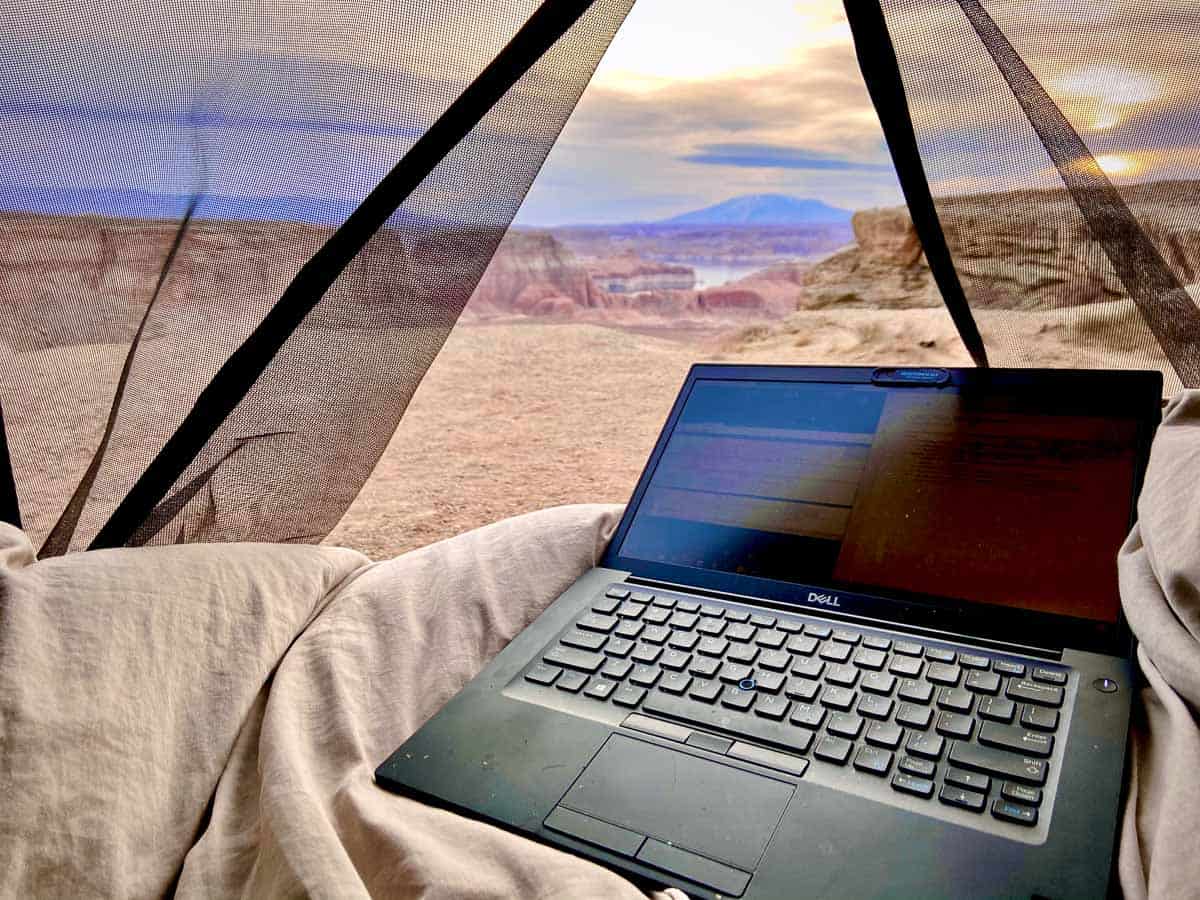
The romanticized image of typing on a beach is a lie. Sand destroys keyboards. Glare makes screens unreadable. Heat causes lithium-ion batteries to swell and burst. The reality of remote work is aggressively air-conditioned cafes, questionable Wi-Fi routers from 2014, and the constant fear of your primary laptop dying mid-project.
The volume of remote workers is exploding. In 2023, as many as 17.3 million U.S. citizens considered themselves to be digital nomads. That number only continues to swell. With millions competing for the same coworking spaces and cafe outlets, your setup needs to be lean and highly mobile.
I see rookies dragging three camera bodies, a drone, and a massive tripod into coffee shops in Bali. It is amateur hour. Every ounce matters. You are not a pack mule. A heavy bag costs you money in budget airline fees. It costs you mobility when trying to catch a departing train in Tokyo. It costs you security because you cannot keep an eye on five different bags. Streamline your gear. You only need items that perform under pressure.
What Is the Bare Minimum Tech Setup?
Your baseline is smaller than you think. You do not need a secondary portable monitor. You do not need a massive mechanical keyboard.
The Computing Core: A lightweight, high-performance laptop. Think an M-series MacBook Air or a high-end Lenovo ThinkPad. You need something that provides 12 hours of real-world battery life.
The Communications Hub: A smartphone with dual eSIM support. Physical SIM cards are archaic. Swapping tiny pieces of plastic on an airplane tray table is a recipe for losing your primary phone number.
The Power Grid: A 20,000mAh power bank. Never rely on finding an outlet. Trains lose power. Cafes restrict access. Your power bank is your lifeline.
The Universal Bridge: A Gallium Nitride charger. It shrinks the physical size of the charging brick while pushing enough wattage to charge a laptop and a phone simultaneously.
The Audio Isolation: Active Noise Cancelling earbuds. Over-ear headphones are too bulky for aggressive minimalist packing. Earbuds fit in a pocket. They block out screaming children on 14-hour flights. They create an instant focus bubble.
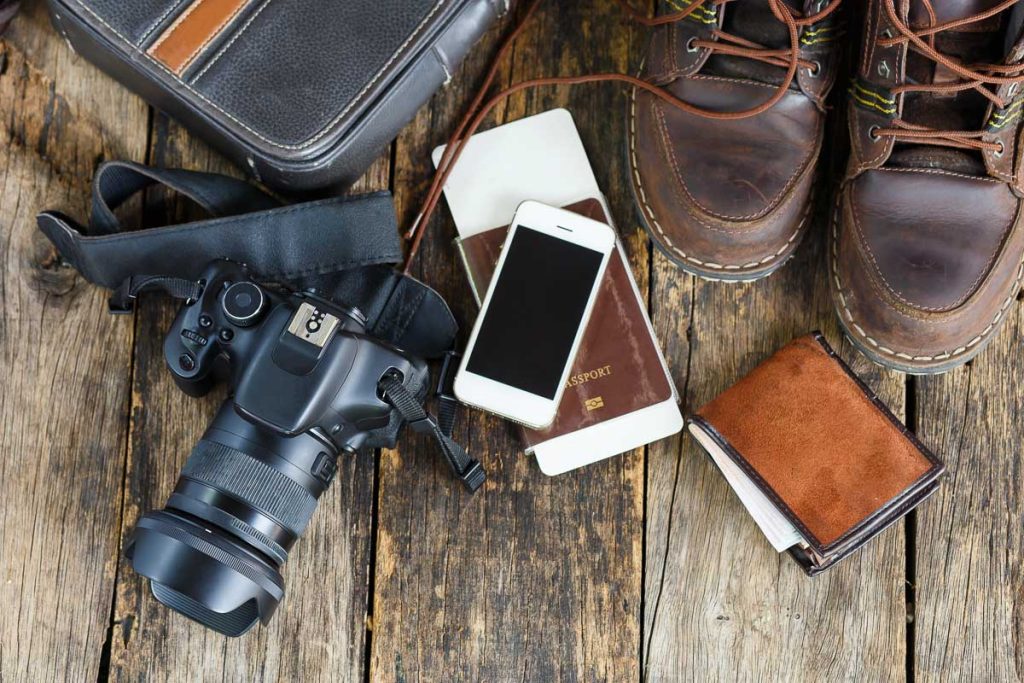
Everything else is situational. You do not need a dedicated Kindle if you can read on your tablet. You do not need a massive DSLR to document your trip. If you are busy crossing off wild and crazy bucket list ideas, you need your hands free. Fumbling with lens caps while hanging off a zipline is a fast way to lose a $2,000 lens.
What Are the Biggest Tech Traps for New Nomads?
Do not buy gear based on influencer recommendations alone. Influencers get paid to sell you things you do not need. Avoid these common pitfalls.
The Drone Trap: Everyone thinks they will shoot cinematic aerial footage. In reality, drones are illegal in many national parks, banned in entire countries, and require massive, heavy batteries. Most end up sitting at the bottom of a backpack for six months.
The Portable Printer: Yes, people actually pack these. Complete waste of space. Every hostel or local print shop can handle your visa documents for a few cents.
The Excessive Hard Drive Array: Spinning disk hard drives fail. Solid State Drives (SSDs) are the only acceptable local storage. Even then, rely on cloud backups. Hardware is temporary. Data is forever.
The Heavy Camera Gimbal: Unless you are being paid to shoot stabilized video for a corporate client, leave it. Software stabilization in modern action cameras and smartphones is more than sufficient.
How Are Wearables Replacing Traditional Gear?
Wearables are doing the heavy lifting now. The tech has finally caught up to the marketing promises. About 21% of Americans use a smartwatch or fitness tracker. These devices are no longer just for counting steps. They monitor altitude sickness markers in the Andes. They track sleep quality on long-haul flights. They act as boarding passes. They replace bulky GPS handhelds entirely.
Then there is the optical shift. The global smart glass market size is valued at USD 13.84 billion. Why? Because having a screen on your face or a camera in your frames removes the friction of pulling out a phone. Think about the friction of travel photography. You see a fleeting moment. A street vendor tossing noodles. A wild animal crossing the road. By the time you unzip your bag, remove the lens cap, and adjust your settings, the moment is gone. Wearable cameras eliminate the gap between seeing and recording.
You can record a busy street market in Hanoi without looking like a tourist waving a target for pickpockets. If you want a solid entry point, check out the AI glasses with a camera from Sunglasshut. They capture decent POV video, take calls, and protect your retinas. It is a dual-purpose item. Sunglasses and a camera. Efficient. No one wants to wear an obvious headset that screams expensive tech. You want items that blend in. You tap your frames. You get the shot. You move on.
Why Is Travel Insurance Non-Negotiable for Tech?
You drop your bag in a puddle. A monkey steals your phone in Bali. A thief slashes your backpack in Barcelona. It happens. You need insurance that covers high-value electronics. The global travel insurance market size was valued at USD 31.25 billion. That massive valuation is not just because people are scared of getting sick abroad. It is because nomads carry thousands of dollars of silicon in their backpacks.
Read the fine print. Standard policies often cap electronics payouts at $500. A decent laptop costs triple that. You must ensure your plan covers high-value items and includes specific riders for computing equipment. Some policies require you to provide receipts proving ownership before you even leave your home country.
Do not assume your credit card travel protection will save you. Most credit card policies offer secondary coverage. This means you have to exhaust other options first.
If your gear is stolen, insurance companies require a police report filed within 24 hours. Good luck handling a foreign police precinct where no one speaks English. You will sit on a plastic chair for four hours to get a stamped piece of paper. Without that paper, your claim is instantly denied. Take photos of your gear’s serial numbers right now. Upload them to a secure server.

How to Pack for Water and Extreme Elements?
Your standard urban nomad kit will fail spectacularly on the open ocean. Saltwater corrodes charging ports in a matter of hours. If you are reviewing a sailing packing list, tech protection becomes priority one.
True Dry Bags: Use thick PVC dry bags. Ziplocks fail. Roll-top dry bags are the only acceptable defense against submersion.
Port Plugs: Buy cheap silicone dust plugs for your laptop and phone ports. They block sand, lint, and moisture.
Silica Gel Packets: Throw a handful into your camera bag. They absorb ambient humidity in tropical climates. This prevents fungus from growing inside your expensive camera lenses.
Thermal Protection: Cold weather destroys battery life. Lithium-ion batteries drain exponentially faster in freezing temperatures. If you are hiking in the Himalayas, keep your phone in an inside pocket close to your body heat.
Never charge a freezing cold battery. It causes lithium plating and permanently damages the cell. Let the device reach room temperature first. Tech dies fast in the elements. Prepare accordingly.
How to Manage Data Security on the Road?
Physical theft is only half the threat. Digital theft is entirely invisible and far more common. When you connect to a free Wi-Fi network at a hostel in Medellin, you are broadcasting your data to everyone in the room.
Virtual Private Networks (VPN): Do not connect to public Wi-Fi without one. Ever. A VPN encrypts your traffic. It stops casual packet sniffing.
Multi-Factor Authentication (MFA): Use a hardware security key or an authenticator app. SMS text messages are not secure. SIM swapping is a real threat. If someone steals your phone, they can intercept your texts and drain your bank accounts.
Full Disk Encryption: Turn on FileVault for Mac or BitLocker for Windows. If a thief steals your laptop, they can wipe it and sell the hardware. But with full disk encryption, they cannot access your client files, your saved passwords, or your personal identity documents.
Privacy Screens: A simple magnetic privacy filter stops the person sitting next to you on a bus from reading your confidential emails. Visual hacking is a low-tech method that works exceptionally well in cramped travel conditions.
Data loss will ruin your trip faster than a broken ankle. Hardware can be replaced in any major city. Your compromised identity cannot.

Where to Source Reliable Gear?
Stop buying cheap replacement cables at airport kiosks. They lack proper voltage regulation. They will fry your motherboard.
Use trusted travel resources to find verified, globally supported gear. Buy from brands that offer international warranties. If your laptop dies in Chiang Mai, you want a brand that has a certified repair center within a scooter ride. Apple and Dell usually do. Obscure Kickstarter brands do not.
Keep digital backups of your purchase receipts in the cloud. Warranty claims overseas require strict documentation. The moment your gear fails is not the moment to start digging through old email inboxes looking for a proof of purchase from three years ago.

Catherine Xu is the founder and author of Nomadicated, an adventure travel blog that helps travelers cross off their bucket list. Since discovering traveling in 2015, she has lived and journeyed to 65 countries across 5 continents and vanlifed the west coast USA for 2+ years. These days, she splits her time in Southeast Asia and California while sharing her travel stories and resources based on first-hand experiences. Catherine's other works has been referenced in major publications like MSN, Self, and TripSavvy.