

The Ultimate Digital Nomad Pre-Departure Checklist
Right before leaving a place, Isa and me always feel the same shift. The bags are half packed, the next country still feels abstract, and the real work begins long before the airport. The International Telecommunication Union said 5.8 billion people were online in 2024, yet 2.3 billion still remained offline, which is a neat reminder that solid connectivity changes once we cross a border. A good pre-departure checklist keeps the money moving, the work stable, and the first few days abroad far less chaotic.
We also start by treating the move like a proper life reset. We begin with the unglamorous bits first, like giving notice, ending a lease, booking the flight, and locking in the first week’s stay before anything else gets messy.

We sort the paperwork before we even touch the wardrobe
The first thing we check is our passport expiry, because IATA states many countries want a passport to stay valid for six months after arrival, even though the exact rule changes by destination. After that, we look at visa rules with fresh eyes. Digital-nomad visas have moved into the mainstream, with one 2025 report mapping 64 countries and finding that 91% of tracked nomad or remote-worker visas launched after 2020, while a 2026 index counted 50+ countries with dedicated remote-work residence routes. Knowing this we never assume the rules from our last trip still apply.
Health paperwork is the next thing to sort out. WHO advises travelers against infectious disease risks and vaccination requirements. Some countries ask for proof of yellow fever vaccination before entry or even before boarding. We keep that in mind especially when our route moves through places with different health rules, because the safest time to deal with a shot or certificate is before we are dragging luggage through an airport.
We keep a small paper folder and a digital folder for travel documents, and then I split the essentials between them. Passport copy, visa approval, insurance policy, emergency contacts, and vaccination proof all live in both places.
We buy travel insurance before the trip feels “real”
The travel insurance rules differ for different countries. For instance, the UK government states international travelers should buy proper travel insurance before they go, and Canada wants travelers to have travel health insurance in place before leaving. I read the exclusions slowly, because the real pain often hides there. That is particularly true on longer trips, where a medical bill or a cancelled leg can swallow a month of work income in one hit.
I also check destination warnings before we leave. Some government warn that travel insurance can be invalidated if someone travels against official advice.
We sort our money like we plan to arrive tired
Once the paperwork is under control, we move to banking. We let our banks know we are travelling, carry at least two payment methods, and keep one emergency fund we can reach from anywhere. We also keep a little cash in a local currency when we can, because the first taxi, snack, or SIM top-up after landing usually refuses to wait for my perfect setup. That little buffer saves a lot of friction in the first 24 hours.
We also protect the physical side of our essentials. Some countries advise to keep passport, phone, and wallet in zipped or inside pockets close to the body, carry only what you need for the day, and store the rest securely.

We set up connectivity before we leave
This part has become non-negotiable for us. The world is online, but the quality of that access still swings wildly from one country to the next. The ITU’s latest figures make that gap obvious, and that is why we never gamble on airport Wi-Fi or a random café connection for our first work tasks abroad. We set up a VPN for public networks, download offline maps, and activate our eSIM before takeoff. In our own routine, an eSIM from SIMOVO.COM fits neatly into that step, because it lets us land ready to message a host, open a map, or reply to a client without hunting for a SIM counter first.
We always keep an offline map ready for navigation. Google explains how to download areas for offline use, which makes a real difference when we arrive somewhere with patchy service or a dead signal on the train into town. We also keep our travel apps installed before departure.
We clean up our tech bag so work survives the journey
This is where the nomad life either feels smooth or starts to wobble. We update our laptops, charge every device fully, test adapters, and back up our files before we travel. We keep a spare cable in our carry-on, not because we love extra weight, but due to the fact the one cable we need always seems to vanish at the worst possible moment. We also use a password manager and two-factor authentication, since work travel and weak passwords make a bad pair.
A VPN can add an extra layer of protection on public networks, and we treat that as a simple rule rather than a technical bonus. If we need to handle anything sensitive, we wait for a safer connection.
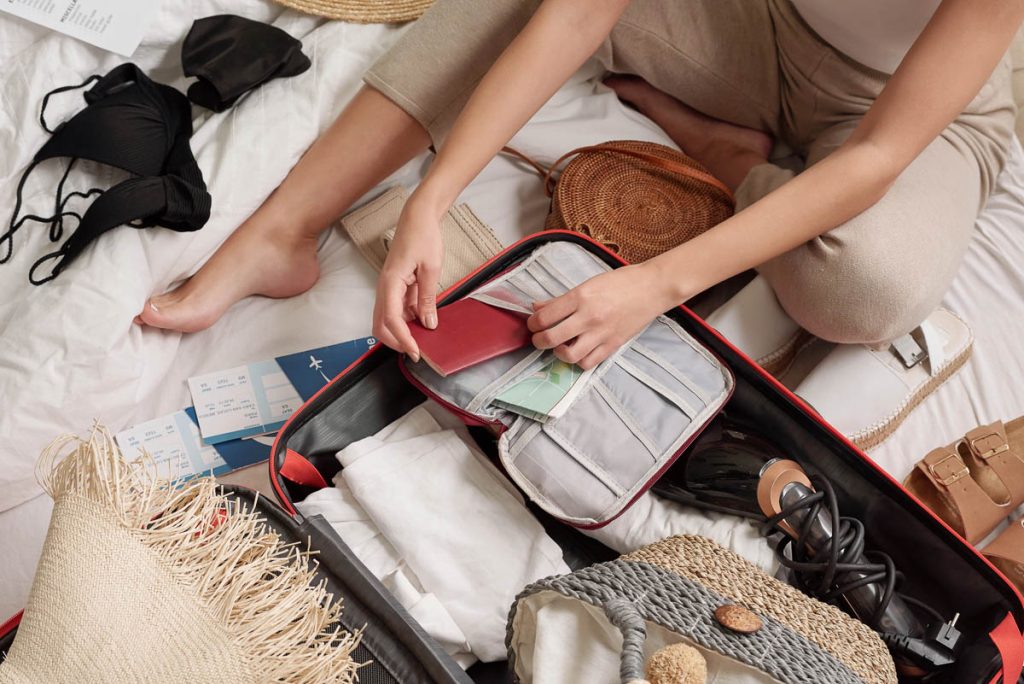
We pack like someone who has to carry their own life
The packing side gets easier once the admin is done. We are fan of a bigger backpack, packing cubes, a day pack, and organized tech storage. A practical starter pack should include passport, wallet, laptop, visas, medication, and ID. We want clothing that layers well, toiletries earning their space, and work gear that keeps its place instead of spilling through the whole bag.
What we want in place before we leave
By the time we close the suitcase, we want four things settled i.e. documents, money, connection, and first roof. When those pieces are ready, the trip feels like a choice instead of a gamble. It frees our mind for the good part, which is the road itself, not the paperwork that kept us standing still.