
20 Traditional Pakistani Food Favorites That Locals Eat on Repeat
Pakistani food carries the weight of several empires and trade routes, which explains why the flavors run deep and rarely feel simple. The foundation comes from Mughal kitchens, where slow cooking, layered spices, and meat-heavy dishes became standard, then blended with regional traditions from Punjab, Sindh, and the northwest.
You’ll see Central Asian influence in dishes like kebabs and pulao, while Persian techniques show up in the use of dried fruits, nuts, and aromatic rice. Everyday meals blend spice and cooking methods that still reflect a long history shaped by migration, royal courts, and street-level cooking.
1. Biryani
- Type: Spiced rice dish
- Where to find: Karachi, Lahore, nationwide
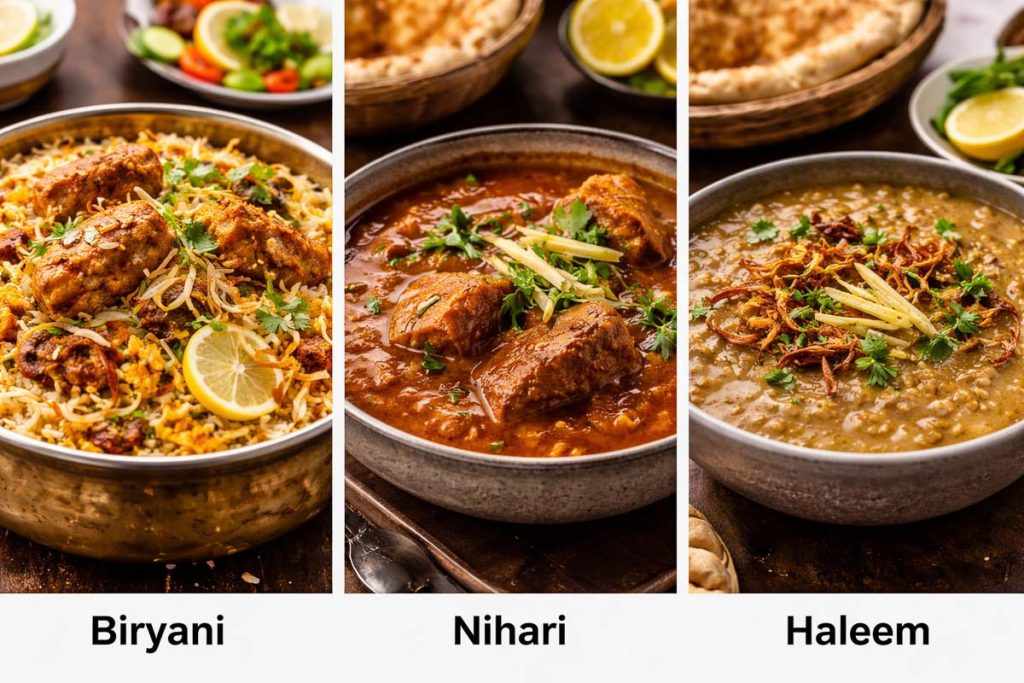
Biryani pulls serious weight in Pakistan, especially in Karachi where entire neighborhoods argue over who makes it best. Long-grain basmati rice is layered with marinated meat, saffron, and fried onions, then cooked together so the flavors settle into every grain. The spice level leans bold, often with potatoes tucked inside in Karachi-style versions. It shows up at weddings, family dinners, and street stalls with equal importance.
2. Nihari
- Type: Slow-cooked beef stew
- Where to find: Lahore, Karachi
Nihari was once a breakfast dish for Mughal royalty who wanted something filling after morning prayers. Beef shank cooks overnight until the broth turns thick and deeply spiced with cloves, ginger, and chili. The marrow melts into the gravy, giving it a heavy texture that sticks with you. It’s usually finished with fresh ginger, lime, and naan on the side.
3. Haleem
- Type: Lentil and meat stew
- Where to find: Hyderabad, Karachi
Haleem takes hours to get right, sometimes close to a full day of slow cooking. Wheat, lentils, and shredded meat are stirred constantly until the mixture turns smooth and thick. The texture is almost paste-like but packed with flavor from spices and ghee. It’s especially popular during Ramadan and served with fried onions and lemon.
4. Karahi
- Type: Stir-fried curry
- Where to find: Lahore, Peshawar
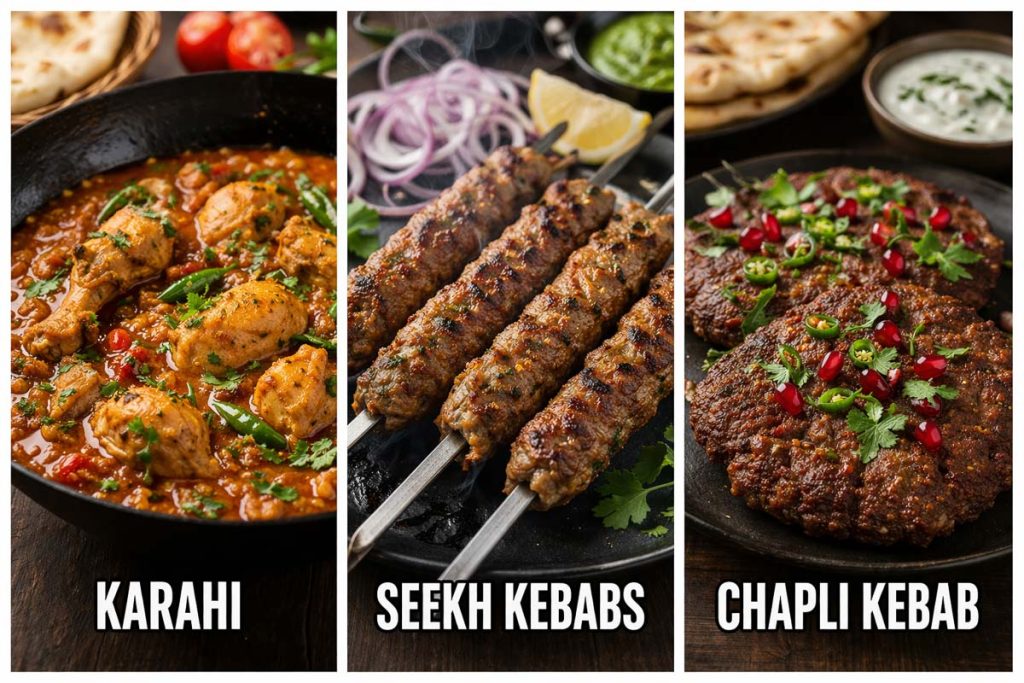
Karahi is cooked fast in a wide metal pan over high heat, usually right in front of you. Chicken or mutton is tossed with tomatoes, green chilies, garlic, and minimal spices compared to other curries. The focus stays on fresh ingredients rather than heavy masala blends. It’s eaten straight from the pan with naan while still bubbling hot.
5. Seekh Kebabs
- Type: Grilled minced meat skewers
- Where to find: Nationwide
Seekh kebabs are shaped by hand onto skewers and cooked over open flames. The meat is mixed with onions, herbs, and spices that keep it juicy while grilling. They cook quickly and come out slightly smoky with a crisp outside. These are a regular at roadside stalls and family barbecues.
6. Chapli Kebab
- Type: Spiced fried meat patty
- Where to find: Peshawar
Chapli kebab stands out because of its flat, irregular shape and bold seasoning. Ground beef is mixed with tomatoes, coriander seeds, and pomegranate seeds before being fried in shallow oil. The edges get crispy while the inside stays soft and juicy. It’s often served with naan and yogurt sauce.
7. Saag
- Type: Leafy green curry
- Where to find: Punjab
Saag is built from mustard greens cooked down until soft and deeply flavored. Cornmeal is sometimes added to thicken the texture slightly. It’s traditionally paired with makki di roti, a flatbread made from corn flour. This dish is strongly tied to rural Punjab and winter months.
8. Makki di Roti
- Type: Corn flatbread
- Where to find: Punjab
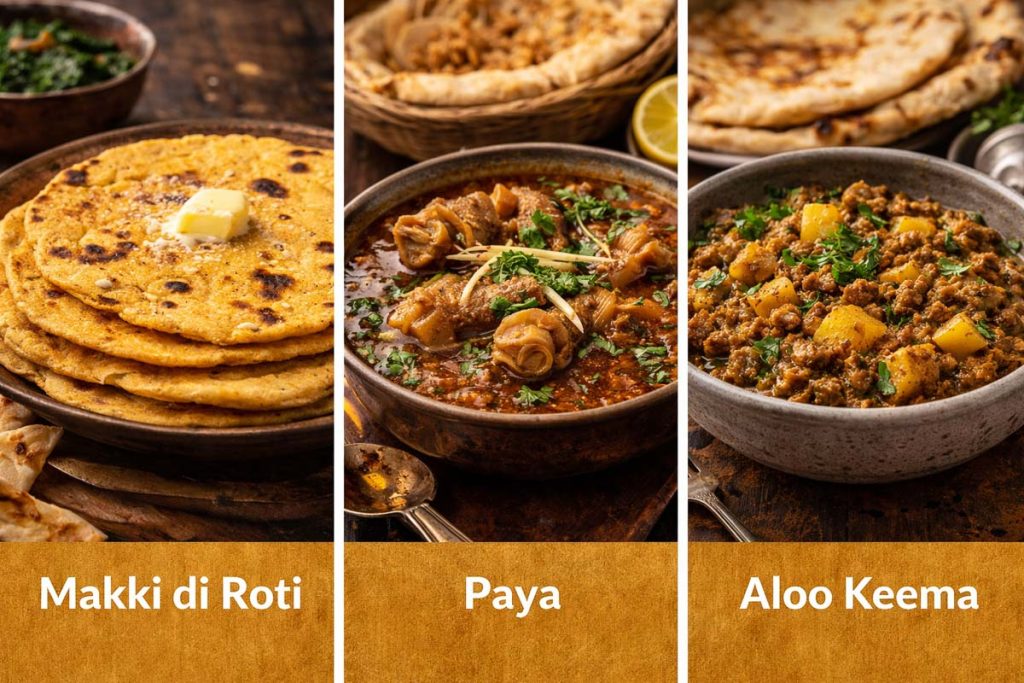
Makki di roti shows up the second winter hits Punjab, and suddenly every kitchen smells like toasted cornmeal and butter. The dough doesn’t behave like wheat, it cracks, breaks, and has to be shaped by hand, which is why it rarely looks perfect on the plate. It cooks thicker than roti and picks up a slightly smoky flavor from the tawa. Most people drown it in butter and tear it straight into saag.
9. Paya
- Type: Trotter stew
- Where to find: Lahore, Karachi
Paya starts before sunrise in a lot of places. The trotters simmer so long that the broth turns sticky and coats your fingers if you eat it the traditional way. Butchers often prep the cuts specifically for this dish, cleaned and split for maximum flavor. This meal keeps small roadside spots packed early in the morning, especially on weekends.
10. Aloo Keema
- Type: Minced meat and potato curry
- Where to find: Nationwide
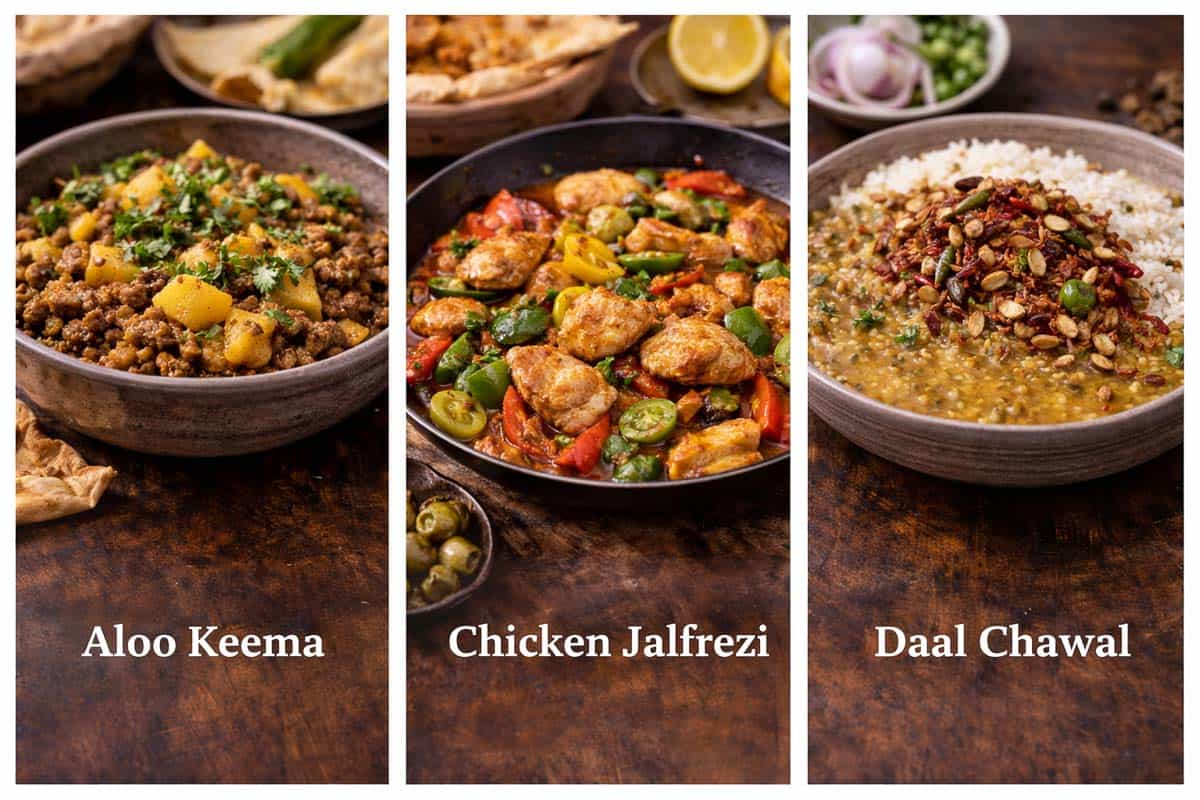
Aloo keema is a staple in Pakistani home cooking and shows up regularly on weekday dinner tables. Ground beef or mutton is cooked with tomatoes, onions, and spices, then combined with diced potatoes that soften into the curry. The dish can be made dry or slightly saucy depending on the region and household style. It is typically eaten with roti and rarely appears as a restaurant centerpiece.
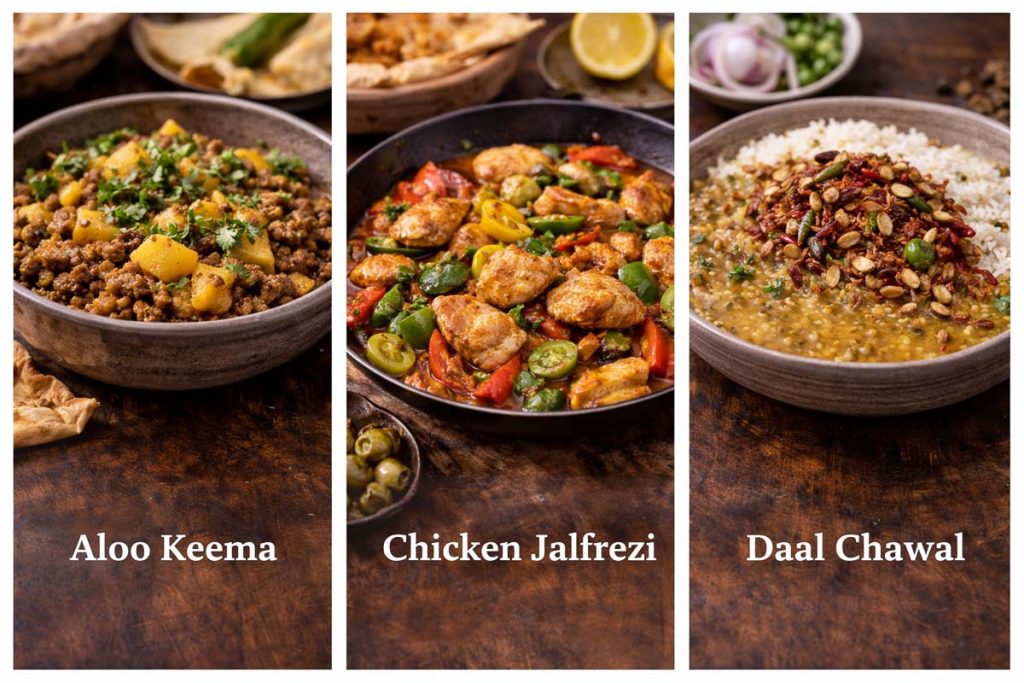
11. Chicken Jalfrezi
- Type: Stir-fried curry
- Where to find: Urban areas across Pakistan
Chicken jalfrezi is cooked quickly over high heat, which keeps the vegetables from breaking down. Strips of chicken are tossed with bell peppers, onions, and a light tomato-based sauce. The dish traces back to colonial-era kitchens where leftover meats were repurposed with spices. It is commonly served in restaurants and pairs with both rice and naan.
12. Daal Chawal
- Type: Lentils with rice
- Where to find: Nationwide
Daal chawal is one of the most common meals across Pakistan due to its simplicity and cost. Lentils are cooked with basic spices like turmeric, garlic, and cumin, then served over plain rice. A final tempering of hot oil with spices is often added on top before serving. It is eaten in homes far more often than in restaurants.
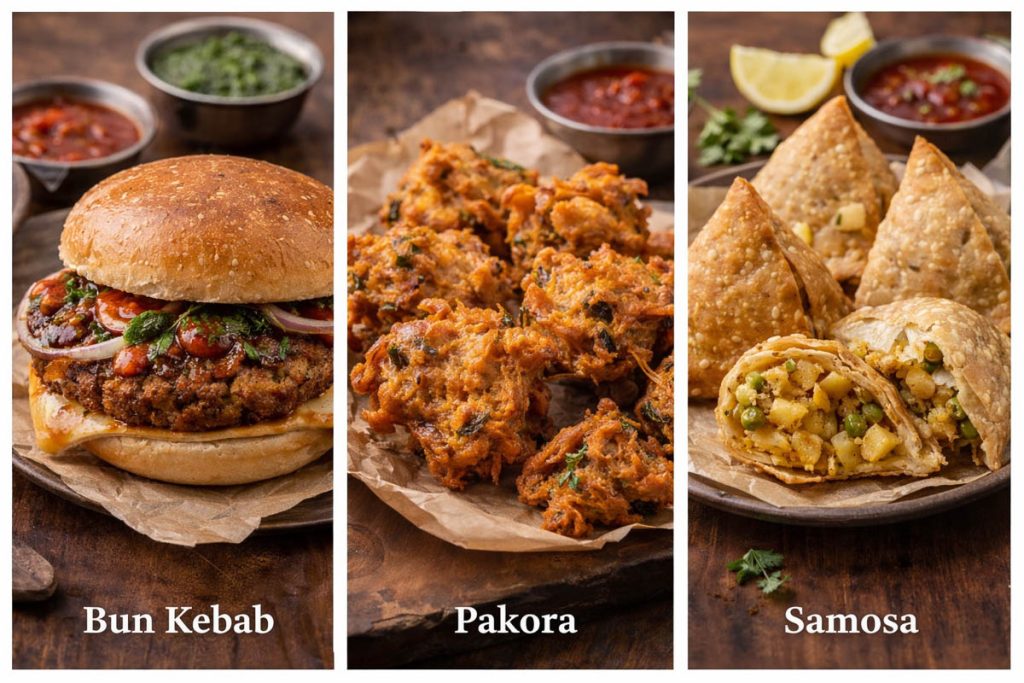
13. Bun Kebab
- Type: Street-style sandwich
- Where to find: Karachi
Bun kebab is a popular street food made with a lentil or meat patty cooked on a flat griddle. The patty is placed inside a soft bun with chutney, onions, and often a fried egg. It became widespread in Karachi as an affordable fast food option.
14. Pakora
- Type: Fried fritters
- Where to find: Nationwide
Pakoras are made by coating vegetables or meat in a spiced chickpea flour batter and deep frying them. Common varieties include onion, potato, and chili. They are especially popular during rainy weather and served with chutney. The dish is widely available from both street vendors and home kitchens.
15. Samosa
- Type: Fried pastry
- Where to find: Nationwide
Samosas are triangular pastries filled with spiced potatoes or minced meat. The outer shell is made from a thin dough that crisps when fried. They are sold in bakeries, street stalls, and snack shops throughout the country. Samosas are typically eaten as a snack rather than a main dish.
16. Halwa Puri
- Type: Breakfast combination
- Where to find: Lahore, Karachi
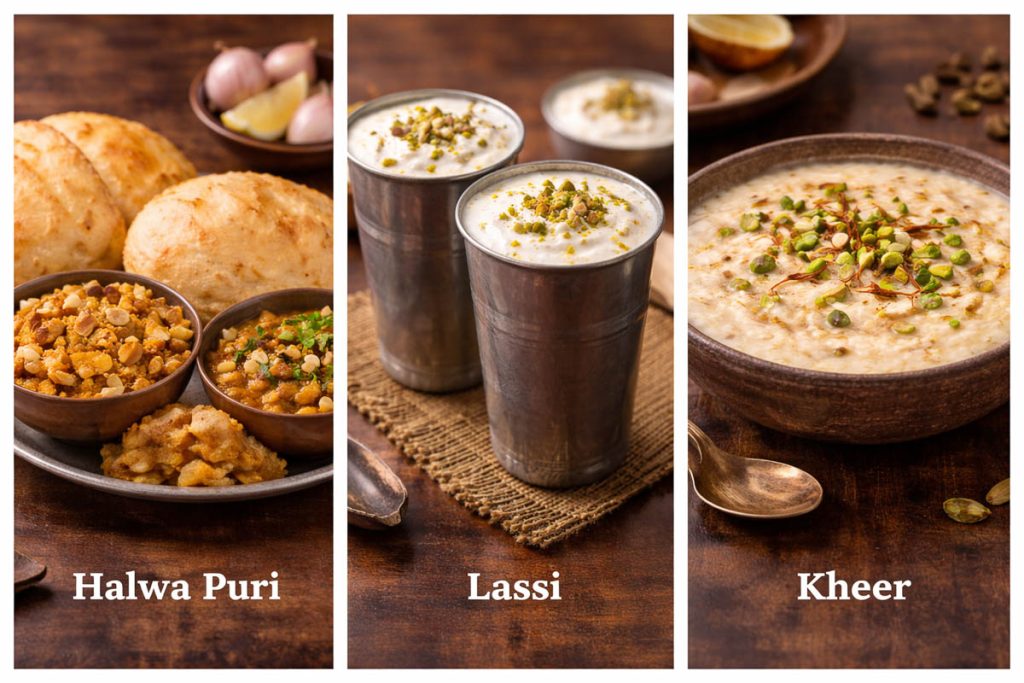
Halwa puri is a traditional weekend breakfast served at roadside eateries and small restaurants. It includes deep-fried bread, semolina halwa, and chickpea curry. The combination of sweet and savory elements defines the dish. It is most commonly eaten in the morning rather than later in the day.
17. Lassi
- Type: Yogurt-based drink
- Where to find: Punjab
Lassi is a thick yogurt drink that is either sweetened or salted. It is traditionally churned and served chilled, often in large metal cups. The drink helps balance spicy meals and is widely consumed in Punjab. It is commonly served after lunch rather than as a standalone item.
18. Kheer
- Type: Rice pudding dessert
- Where to find: Nationwide
Kheer is made by slowly cooking rice in milk until the mixture thickens. Sugar, cardamom, and nuts are added for flavor. The cooking process requires steady heat to avoid burning the milk. It is commonly prepared for celebrations and family gatherings.
19. Gulab Jamun
- Type: Syrup-soaked dessert
- Where to find: Nationwide
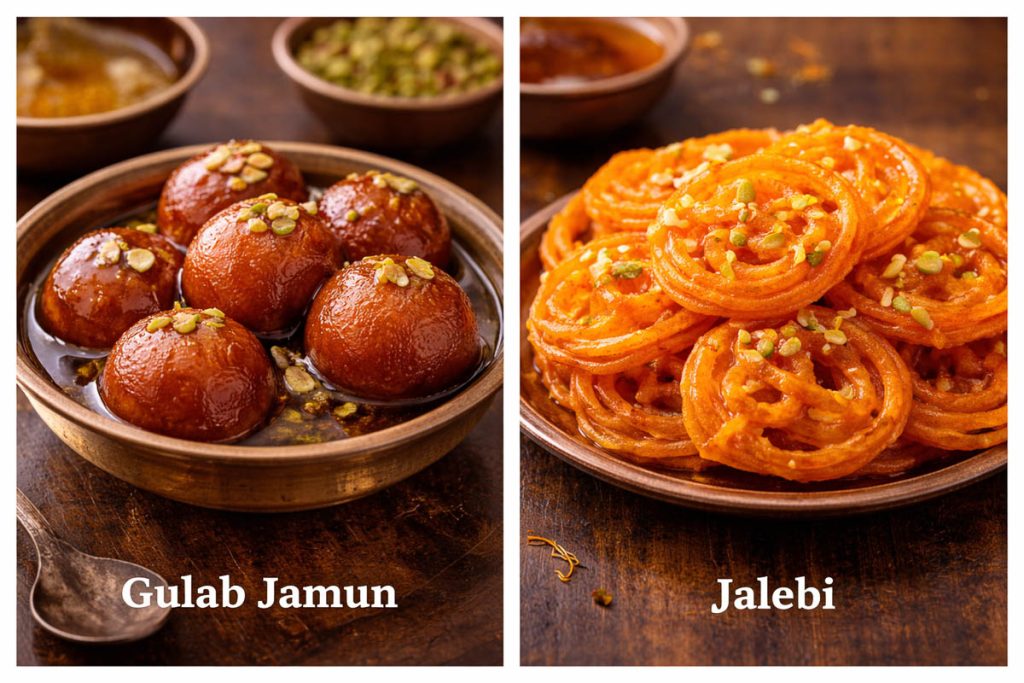
Gulab jamun consists of fried dough balls soaked in sugar syrup flavored with rose water or cardamom. The dough is typically made from milk solids. Proper frying ensures a soft interior and evenly browned exterior.
20. Jalebi
- Type: Deep-fried sweet
- Where to find: Nationwide
Jalebi is made by piping fermented batter into hot oil in spiral shapes. The fried pieces are immediately soaked in sugar syrup. This creates a crisp outer layer and a syrupy interior, often eaten fresh and served warm.

Catherine Xu is the founder and author of Nomadicated, an adventure travel blog that helps travelers cross off their bucket list. Since discovering traveling in 2015, she has lived and journeyed to 65 countries across 5 continents and vanlifed the west coast USA for 2+ years. These days, she splits her time in Southeast Asia and California while sharing her travel stories and resources based on first-hand experiences. Catherine's other works has been referenced in major publications like MSN, Self, and TripSavvy.