
20 Traditional German Food Favorites That Go Way Beyond Sausages
Pork shows up everywhere in Germany, and the country produces millions of tons of it each year and built an entire food identity around it. Traditional German food leans heavy and rooted in colder seasons where meals needed to actually fill you up. You will see slow-cooked meats, sausages in dozens of regional styles, and sides like potatoes and cabbage that have been feeding people here for centuries.
Regional pride is tied to the food, so a roast in the Rhineland might taste slightly tangy, while something similar in Bavaria comes with darker sauces and crisp skin. At the same time, German food is not just heavy plates and beer halls. There are lighter dishes, bakery traditions that go back hundreds of years, and desserts that became global favorites without losing their roots.
1. Sauerbraten
- Type: Slow-braised meat dish
- Where to find: Rhineland, Franconia, across Germany
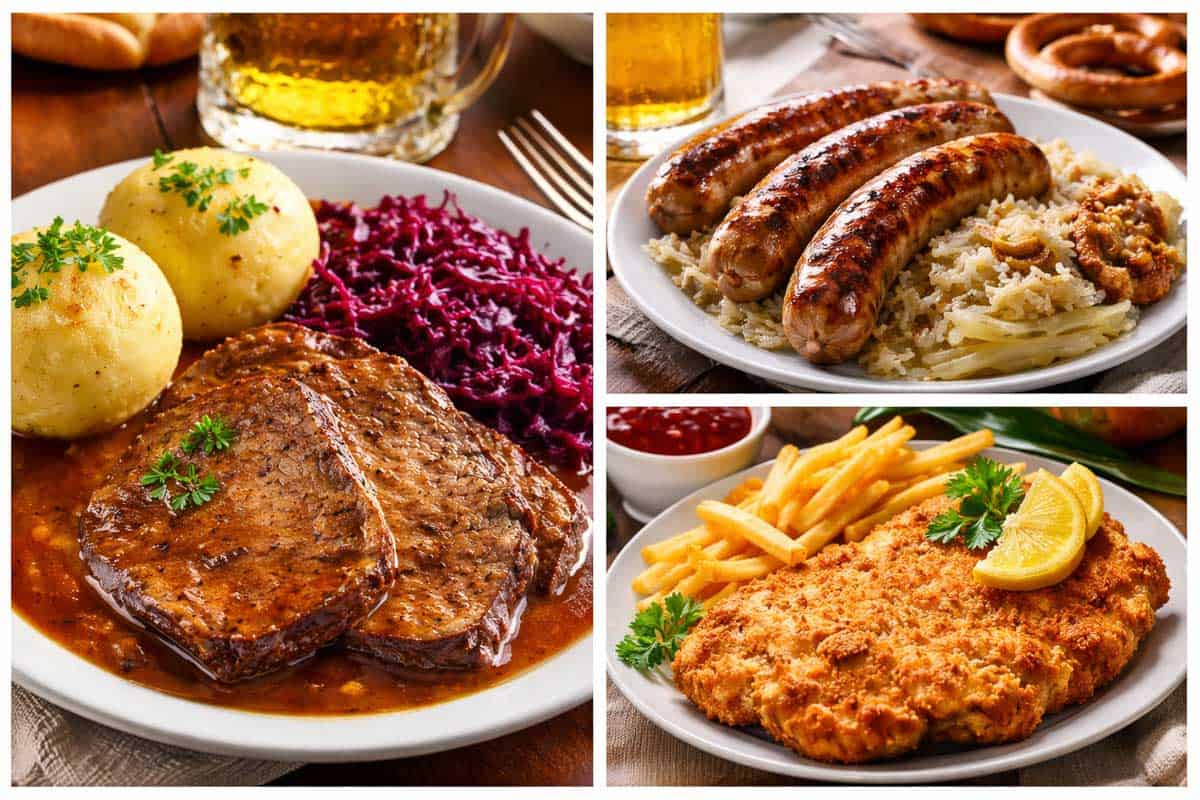
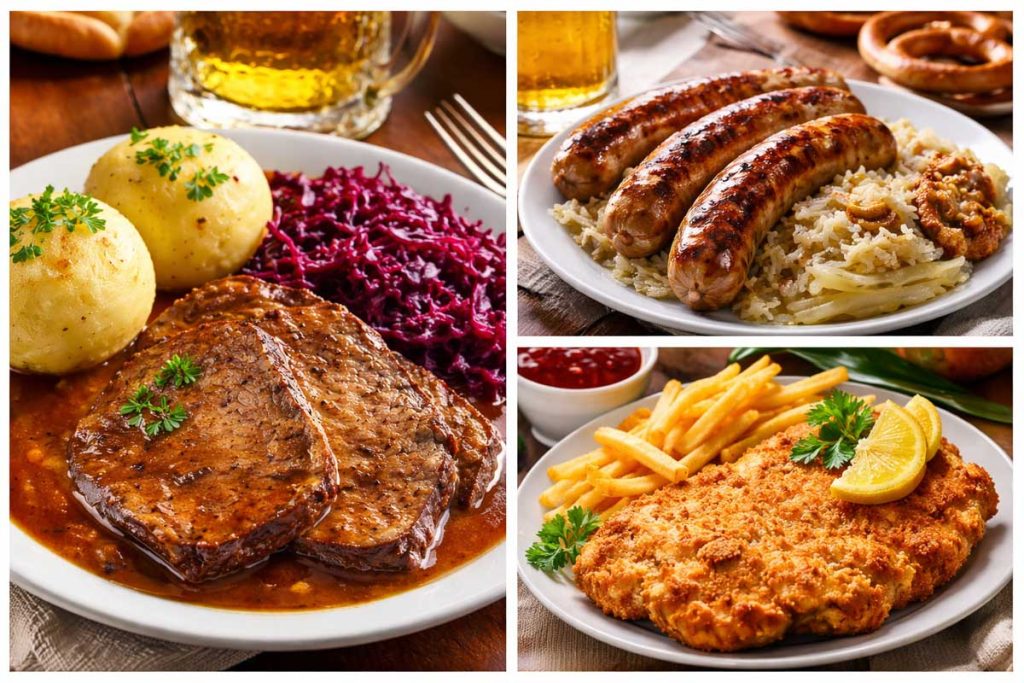
Sauerbraten dates back to Roman times and later became a staple across German regions with local twists. Beef is marinated for several days in vinegar, spices, and aromatics before being slow-cooked until tender. The long marinade gives it a slightly tangy flavor that sets it apart from other roasts. It is usually served with red cabbage and potato dumplings, with a gravy often enriched using crushed gingerbread in the Rhineland version.
2. Bratwurst
- Type: Grilled sausage
- Where to find: Nuremberg, Thuringia, nationwide
Bratwurst has been documented in Germany since the 14th century, with regional recipes varying in spice blends and meat ratios. It is typically made from pork or veal and seasoned with herbs like marjoram. Nuremberg versions are small and served in multiples, while Thuringian ones are longer and grilled over charcoal. Street vendors and beer gardens keep this dish firmly tied to everyday German food culture.
3. Schnitzel
- Type: Breaded fried cutlet
- Where to find: Across Germany, especially southern regions
Schnitzel became popular in Germany through Austrian influence, particularly the Viennese style. Thin cuts of pork or veal are breaded and fried until crisp and golden. The dish is known for its simple preparation that relies on texture and proper frying technique. It is often served with lemon, potato salad, or fries.
4. Rouladen
- Type: Stuffed meat roll
- Where to find: Across Germany
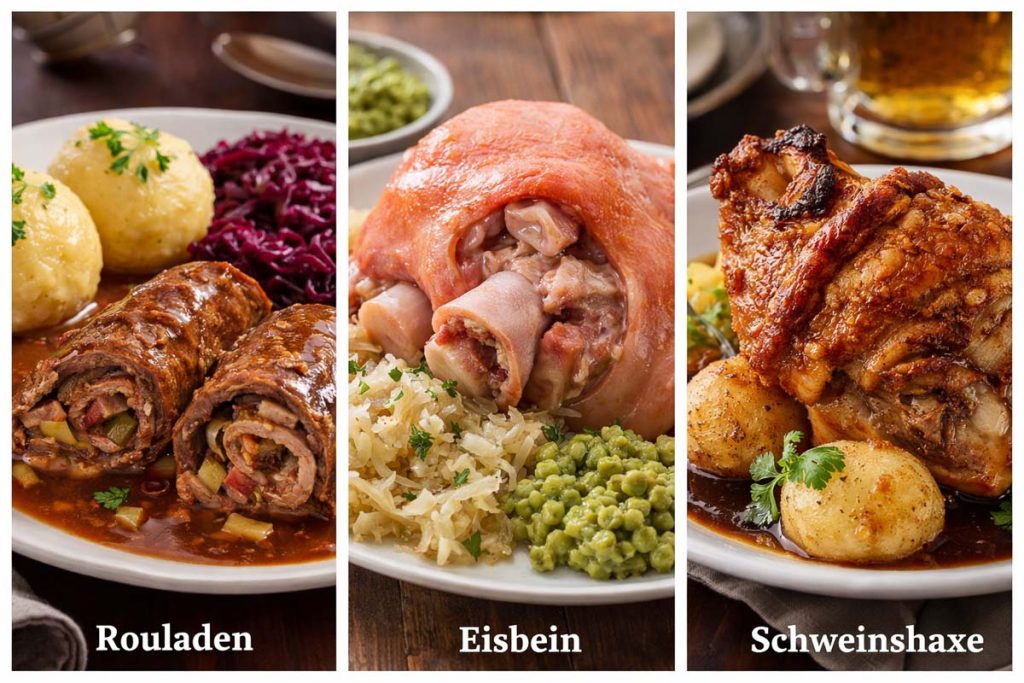
Rouladen is a traditional Sunday meal that dates back to the 19th century. Thin slices of beef are rolled around mustard, onions, pickles, and bacon before being braised. The filling creates a savory and slightly tangy flavor profile once cooked. The dish is typically paired with gravy, red cabbage, and dumplings.
5. Eisbein
- Type: Boiled pork knuckle
- Where to find: Berlin, northern Germany
Eisbein is especially popular in Berlin and northern regions where it is cured before cooking. The pork knuckle is simmered until tender and served with sauerkraut and peas. Unlike southern versions, it is not roasted but kept soft with a gelatin-rich texture. The dish reflects older preservation methods used in colder climates.
6. Schweinshaxe
- Type: Roasted pork knuckle
- Where to find: Bavaria
Schweinshaxe is the southern counterpart to Eisbein and is known for its crispy skin. The pork knuckle is roasted slowly until the meat becomes tender and the exterior crackles. It is commonly served with potato dumplings and dark beer gravy. This dish is strongly associated with Bavarian beer halls.
7. Spätzle
- Type: Egg noodle pasta
- Where to find: Swabia, southern Germany
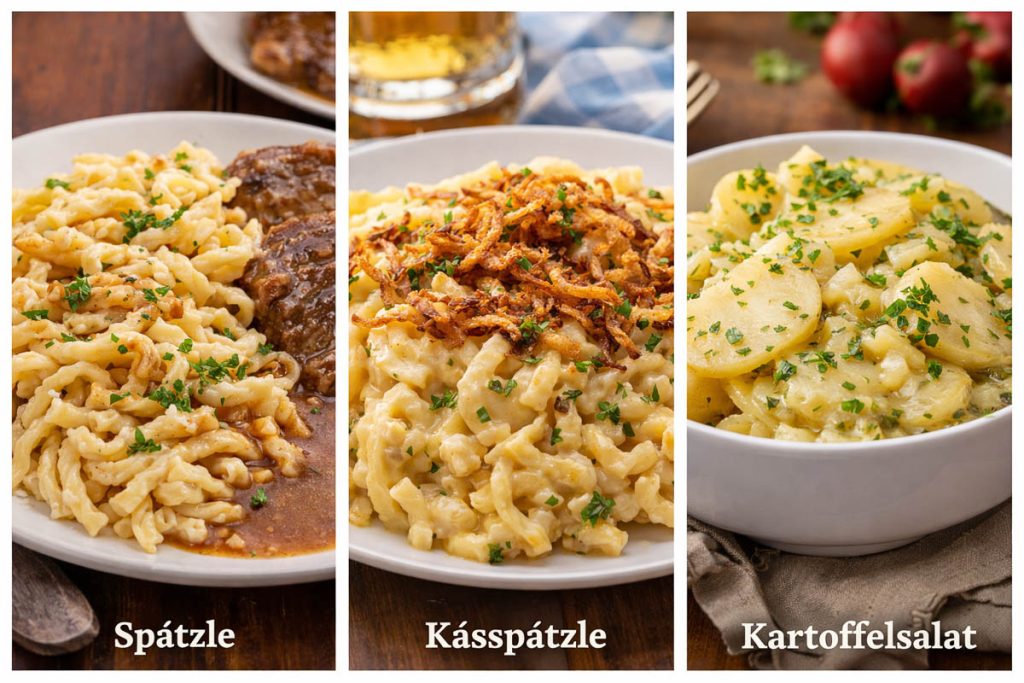
Spätzle originated in the Swabian region and has been a staple for centuries. The dough is pushed through a press or scraped into boiling water to form irregular noodles. Its soft texture makes it ideal for soaking up sauces and gravies. It is often served as a side or topped with cheese as Käsespätzle.
8. Käsespätzle
- Type: Cheese noodle dish
- Where to find: Swabia, Bavaria
Käsespätzle is often compared to mac and cheese but has a denser texture and stronger flavor. Layers of Spätzle are combined with grated cheese and fried onions. The dish is baked or heated until the cheese melts into the noodles. It is a common comfort food in southern Germany and alpine regions.
9. Kartoffelsalat
- Type: Potato salad
- Where to find: Nationwide, with regional variations
Kartoffelsalat varies widely between northern and southern Germany. Northern versions use mayonnaise, while southern styles rely on vinegar and broth. It has been a staple side dish since the 19th century. It is commonly served alongside sausages and schnitzel.
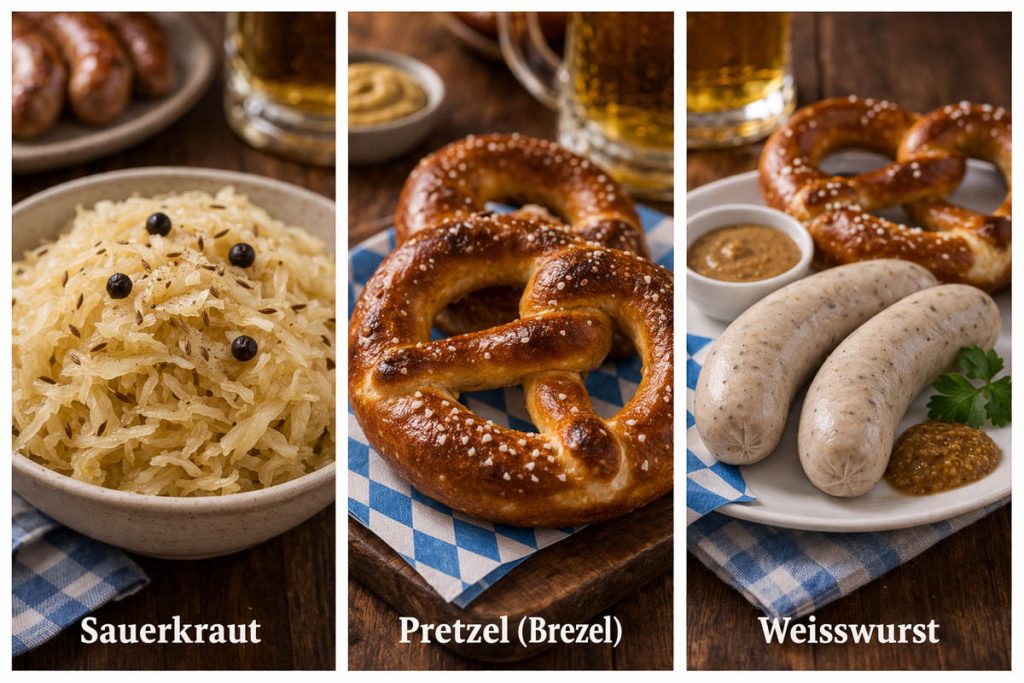
10. Sauerkraut
- Type: Fermented cabbage
- Where to find: Across Germany
Sauerkraut has been a key part of German diets for centuries due to its long shelf life. Cabbage is fermented with salt, creating a sour flavor and probiotic benefits. It was historically important for preserving vegetables through winter. Today it is served with meats like sausages and pork dishes.
11. Pretzel (Brezel)
- Type: Baked bread snack
- Where to find: Bavaria, southern Germany
The German pretzel has roots in medieval monasteries and is tied to baking traditions. It is known for its twisted shape and deep brown crust achieved with a lye bath. The inside remains soft while the outside develops a slight chew. It is commonly eaten with mustard, butter, or alongside beer.
12. Weisswurst
- Type: Poached white sausage
- Where to find: Bavaria
Weisswurst was created in Munich in the 19th century and is traditionally eaten before noon. It is made from veal and pork back fat, flavored with parsley and lemon. The sausage is gently heated rather than grilled. It is served with sweet mustard and pretzels.
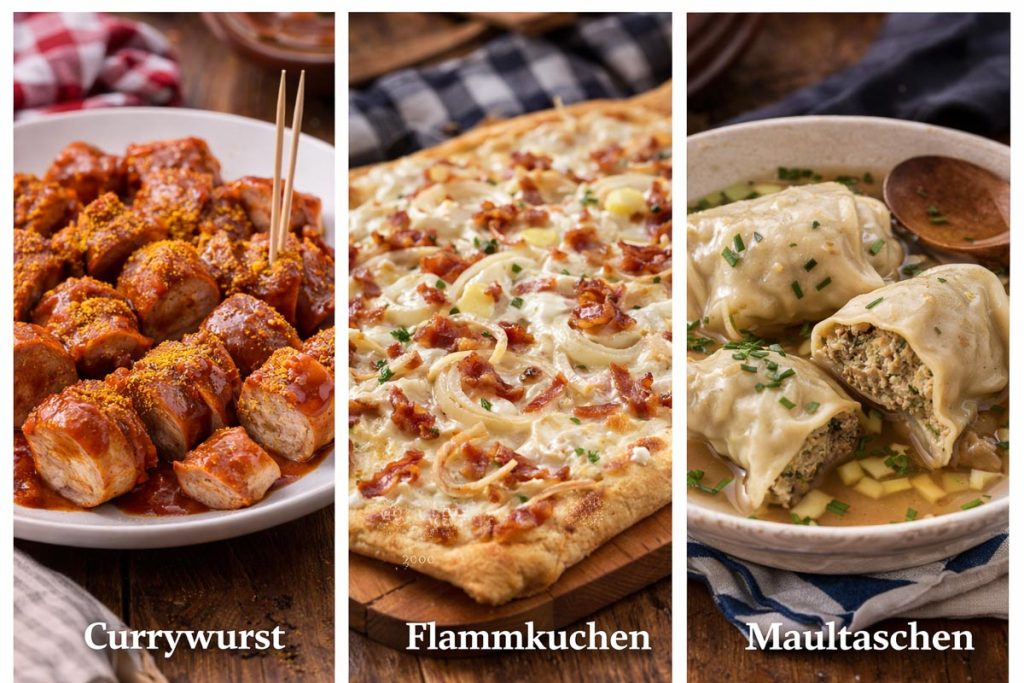
13. Currywurst
- Type: Sausage with curry ketchup
- Where to find: Berlin, Ruhr region
Currywurst originated in Berlin after World War II when curry powder became available through trade. Sliced sausage is topped with a ketchup-based sauce and curry spice blend. It quickly became a popular street food across urban areas. The dish reflects postwar food culture and international influence.
14. Flammkuchen
- Type: Thin flatbread
- Where to find: Alsace, southwestern Germany
Flammkuchen comes from the Alsace region and was originally used to test oven heat. The dough is rolled very thin and topped with crème fraîche, onions, and bacon. It cooks quickly at high temperatures, creating a crisp base. The dish is often compared to pizza but uses different ingredients and preparation.
15. Maultaschen
- Type: Stuffed pasta dumplings
- Where to find: Swabia
Maultaschen are large dumplings filled with meat, spinach, and herbs. They were created by monks who hid meat inside pasta during fasting periods. The dish can be boiled or pan-fried. It is often served in broth or sliced and sautéed.
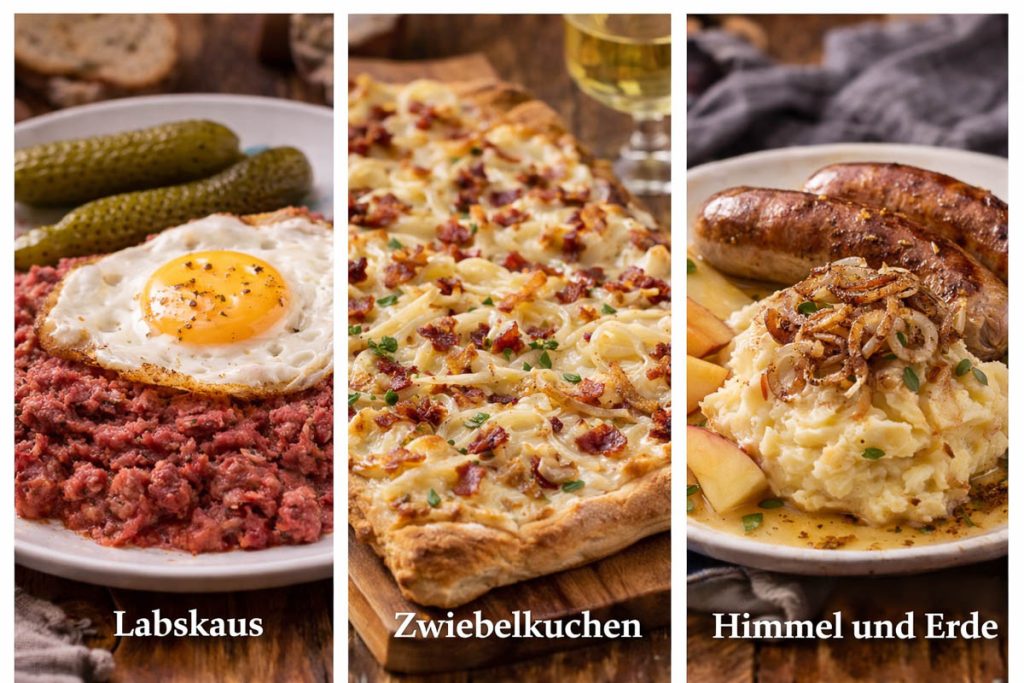
16. Labskaus
- Type: Mashed meat and potato dish
- Where to find: Northern Germany, especially Hamburg
Labskaus originated as a sailor’s meal due to its long-lasting ingredients. It combines corned beef, potatoes, onions, and beetroot into a mash. The dish is often topped with a fried egg and served with pickles. Its appearance is unusual, but it remains a regional classic.
17. Zwiebelkuchen
- Type: Savory onion tart
- Where to find: Southern Germany, wine regions
Zwiebelkuchen is traditionally served during autumn wine festivals. It consists of a yeast or shortcrust base topped with onions, cream, and bacon. The dish is closely tied to the wine harvest season. It is commonly paired with young wine called Federweißer.
18. Himmel und Erde
- Type: Potato and apple mash with sausage
- Where to find: Rhineland
The name translates to “Heaven and Earth,” referring to apples from trees and potatoes from the ground. The dish combines mashed potatoes and apples with fried onions and sausage. It has roots in rural cooking traditions. The sweet and savory mix defines its character.
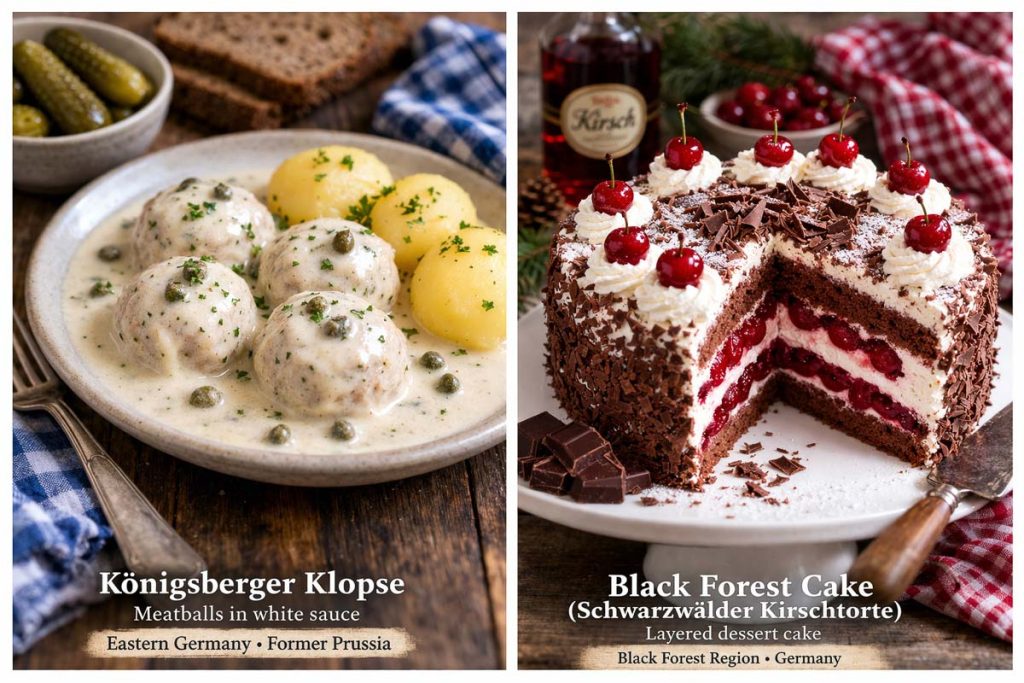
19. Königsberger Klopse
- Type: Meatballs in white sauce
- Where to find: Eastern Germany, former Prussia
Königsberger Klopse originated in East Prussia and remains a well-known dish today. Meatballs are made with minced veal or pork and simmered in broth. They are served in a creamy white sauce with capers. The capers give the dish a distinctive tangy flavor.
20. Black Forest Cake (Schwarzwälder Kirschtorte)
- Type: Layered dessert cake
- Where to find: Black Forest region
This cake comes from the Black Forest and is known for its use of Kirsch, a cherry brandy. Layers of chocolate sponge are combined with whipped cream and cherries. It became widely popular in the 20th century and is now recognized internationally. The balance of chocolate, cream, and fruit defines the dessert.

Catherine Xu is the founder and author of Nomadicated, an adventure travel blog that helps travelers cross off their bucket list. Since discovering traveling in 2015, she has lived and journeyed to 65 countries across 5 continents and vanlifed the west coast USA for 2+ years. These days, she splits her time in Southeast Asia and California while sharing her travel stories and resources based on first-hand experiences. Catherine's other works has been referenced in major publications like MSN, Self, and TripSavvy.